Ahead of publication of Burying Norma Jeane and Sunday’s related events, please enjoy this blog post by author Leah Rogin.
When I started writing my novel, Burying Norma Jeane, it began as a short story response to finding out that Marilyn Monroe was sharing crypt-space with Hugh Hefner for the rest of eternity without ever having given permission.
I measured that 2020-pandemic era in terms of “High Covid” (when we were baking pineapple upside down cakes and wondering how we’d isolate for six whole weeks), “Middle Covid,” (when the weeks turned to years and all that baking caught up with us), and “Low Covid,” (which no one likes to talk about). It was right between Middle Covid and Low Covid when I started watching all the Marilyn movies. I’d only watched a couple before, and I was working on this short story about visiting her crypt, and it was a way to help the days pass. While I was watching them, I’d write these snarky film reviews of each one, as a way to talk back to the chauvinism, the 1950s cheesiness, the way men kept lassoing Marilyn, both literally and metaphorically. Eventually I realized this was all part of the same project, that the short story and the film reviews belonged together, and trying to figure out how to sew them took me through most of Low Covid. As I brought my book into the world, I realized that while almost everyone knows who Marilyn Monroe is, many folks have never seen one of her movies all the way through. I was raised by a cinephile and have always been a classic film fan, so this possibility had not occurred to me! If you’ve never seen a Marilyn Monroe movie, watch one of these three and then tell me about it at leahrogin@gmail.com
Some Like it Hot (1959) is probably the quintessential Marilyn Monroe movie, and it’s super gender-bendery in ways that hold up surprisingly well. Men posing as women, posing as men are working hard to break down gender binaries before anyone knew that was a thing, and the closing scene is a particularly classic representation of this. It was given the #22 spot on the American Film Institute’s (AFI) Top 100 films celebrating 100 years of Hollywood, and was named the #1 Comedy on AFI’s 100 Funniest American Movies of All Time. Everyone involved in it was nominated for an Academy Award except Marilyn Monroe, who carries the whole freakin movie, which tells you a lot of what you need to know about how she was treated in Hollywood. Watch it with a lover in a sexy nightie; swap pajamas halfway through.
The Misfits (1961) was Marilyn Monroe’s last released movie (after it was completed she worked on never-finished Something’s Got to Give). She starred in it with her quintessential Daddy figure, Clark Gable, who died 10 days after filming wrapped. It was a rough movie for all involved. An anti-western that uses the backdrop of the evaporating cowboy lifestyle, it was written by Pulitzer Prize-winning fink, Arthur Miller. Marilyn’s third husband, and author of prestigious plays like Death of a Salesman, Miller probably didn’t marry Marilyn just to break into Hollywood? And he definitely didn’t write this whole movie just to torture the wife who was about to leave him? Whatever the case, Marilyn definitely should have won an Academy Award for this one. and probably a “not murdering her superfink of a husband” award if such things were being passed out. Watch it in a cowboy hat and invite some friends.
Gentleman Prefer Blondes (1953) is my personal favorite Marilyn Monroe musical. I grew up watching it as a kid and must have seen it 20-30 times. I was surprised when I got to graduate school and read the 1925 novel by Anita Loos in my feminist literature class, and maybe that whole juxtaposition is what started my journey of taking Marilyn more seriously. Whether or not you want to see it through a post-feminist lens, Jane Russell and Marilyn have hilarious chemistry, “Diamonds are a Girl’s Best Friend,” is the single best musical number ever (fight me!) that you probably don’t realize you’ve seen spoofed / homaged everywhere from Madonna to Moulin Rouge to Beyonce. Watch it with a swanky cocktail party and lots of glamorous costume changes.
Bonus Watches if you’re feeling Noir-y: Don’t Bother to Knock (1952) and Niagara (1953) I could keep gushing about Marilyn Monroe movies, and if you’ve never seen one, I encourage you to make a night of it. I think both Don’t Bother to Knock, and maybe especially Niagara are the best noir films of the 1950s, and they show a dark side to her acting talents that you won’t see in the films above.
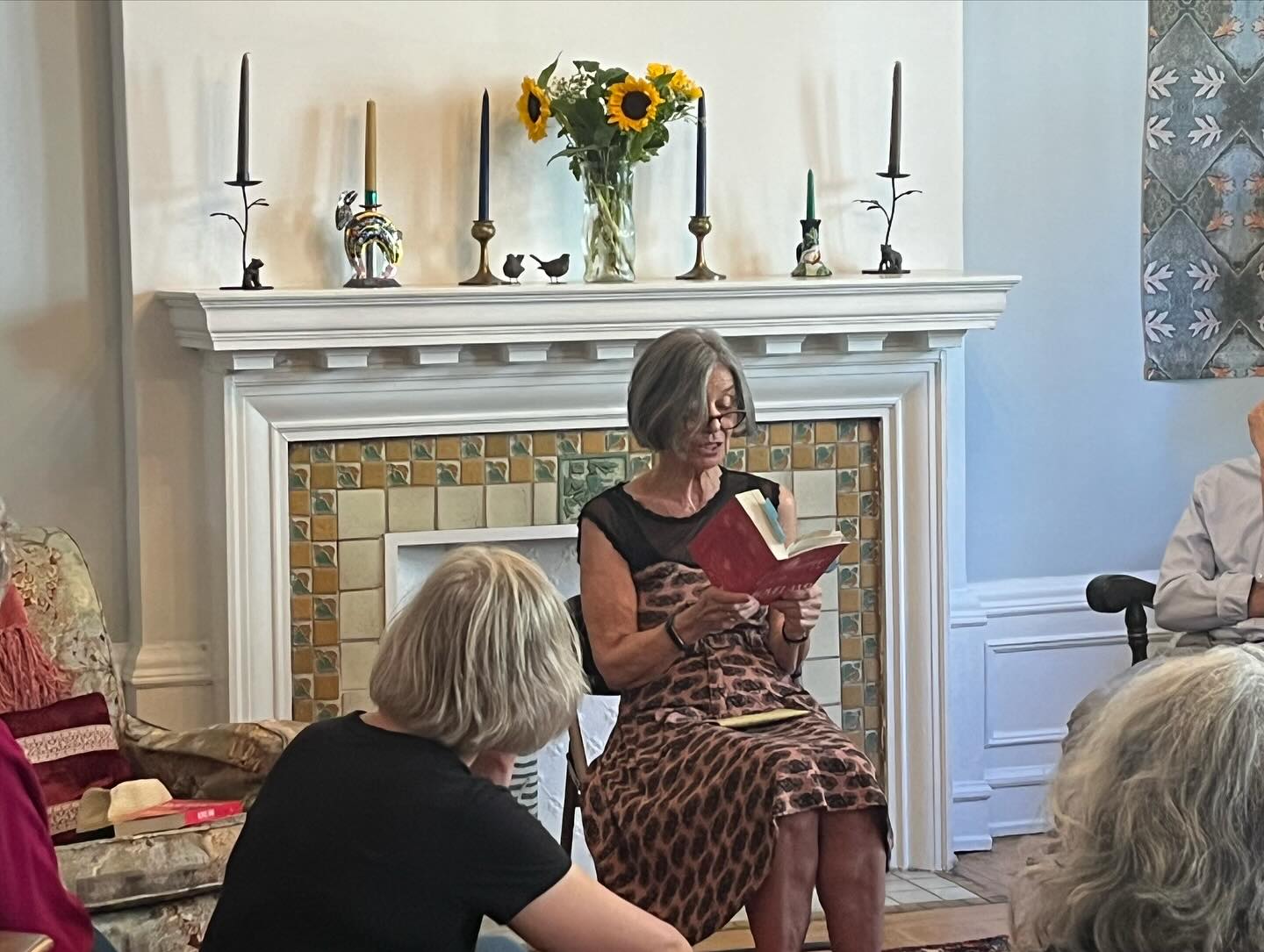
You can also pick up Burying Norma Jeane and read my version of Marilyn’s biography in the form of movies, while also cheering for Matilda and Miriam to liberate her body from Hugh Hefner’s stanky clutches. And if you’re in the L.A. area on August 4th, Marilyn’s Death-versary, come see another kind of film at the Hollywood Library: Deanne Stillman’s “Marilyn Monroe Flees her Grave When Hugh Hefner is Buried Next Door” and hear me read from and sign copies of Burying Norma Jeane. You might even win a Marilyn Monroe trading card or other swag from Blackwater Press and the Library.
I should start off by saying I’m probably the last person you’d want to give you or anyone relationship advice! I had almost no romantic experience when I got married in college, I was divorced after 24 years of marriage, and haven’t lived with anyone since. By the usual measures, which includes marching into the future till death do you part, that makes me a total failure at romantic relationships.
Was it a failure, though? I not only had some of the best times in my life with all the romances I’ve had (I don’t mean casual dating, which has been something of a disaster), I’ve learned from each of them — both learned what I really like (and don’t), and also how to understand what’s happening while it happens. So, I’m thinking here of general “advice,” rather than dissecting the specific relationships I’ve had.
Being honest, but not too honest, looking back, I see how difficult it was for me to express my thoughts when I wasn’t sure how they’d be received. Often, my fear of rejection and losing what I had kept me from asking for more, when what I had wasn’t enough. So, I settled, and told myself that relationships aren’t ideal, that no one is perfect, and so on. Which is true. But at some point, you have to know what you shouldn’t put up with, even if you can put up with it by turning your head away. Relationships are embodied habits: once you both get into a familiar groove of giving and taking, this much and not more or less, it gets harder and harder to change that equation.
I had a therapist once who was just so-so as a therapist, but had a moment with me that I still recall. It started with my complaining, as usual, about a certain gentleman. This gentleman had, as he so often had, casually answered a question with an evasive and a possibly ironic tone that seemed hurtful to me (I honestly no longer remember what the question was). What I was dwelling on was my sense of being wounded, going over and over the conversation to see if I could read what this person meant by his response. Of course, I was hoping the therapist would read his words, read him, for me. But after some tedious minutes of this (poor lady), she leaned forward and said, “Let’s talk about why you didn’t ask him on the spot, ‘What did that tone mean?’, when he said it.” This shift in perspective was amazing: it forced me to ask myself why I was afraid to question him, which is a kind of demand for the truth. Another way to put this: I saw you have to stand up for yourself or you’ll get mowed down. And if you can’t risk it, you’ve already been mowed down to grass-level anyway. So, risk it!
Now here’s what makes it tricky: There’s a thin line between “standing up for yourself” and being so sensitive to slights and injuries that you’re in a constant, pointless battle with the other for the preservation of your egos. When are you justifiably protecting yourself and when are you merely trying to control the other person? I saw this played out, unfortunately, with my own parents for all the years I lived with them.
Amusingly, I’ve watched reality dating/marriage shows on TV where it’s easy to see this kind of interaction all the time. A is hurt by something B did or said, B apologizes, A is still pissed off and keeps launching offensive attacks against B in the name of “being honest about my feelings,” which causes B to get defensive, whereupon A accuses B of “getting defensive” (duh). That’s not “honesty”, that’s spilling aggression, sometimes without being aware that your hostility is more obvious than you think.
Here’s what I’ve learned: Be honest, both to yourself and to the Other, but be curious also. Be curious about why someone behaved this way or that, what expectations they have that are different from your own, what they might want that’s different than you want, and how you can both get something out of it, even if one can’t win. “What were you thinking?” and “Why do you do that?” (or “say that”), can be aggressive questions, or compassionate questions. The intent (and tone) is everything. The former implies “You’re an idiot or a bad person,” the latter says “I want to understand you because you’re worth it.”
I was very young and inexperienced when I married, and so was my husband. When disagreements came up, sometimes big ones, I had no idea how to talk about them – I mean I literally had no vocabulary to use in talking it out or figuring out what to do. So, I would cry, and he would apologize or bluster, and then, uncomfortable with the anger, we’d pretend to go on as if it were all back to normal. And we never got much better at it once this pattern was established. Adding children to the mix just reinforced the pattern, since the stakes were higher: there’s more incentive to stay together, but that can work for or against you.
One more lesson from reality TV: it’s fascinating to see how often couples interrupt each other while arguing. Sometimes neither completes an actual sentence, or one babbles while the other lapses into complete unresponsiveness. Neither listens to the other, unless it’s to listen for a trigger that tells them to bring out their own six-shooters. If I were in an argument with a boyfriend or husband again, I’d ask for each of us to talk (for a reasonable length of time) until each has said what they want before the other person does the same. No interrupting, no exclamations; just LISTEN, damn it, and learn. And be curious about what you hear before you rush to contradict it, or say why the other is wrong, or make your own case. Ask: what were you hoping for, what was such-and-such like for you?
Of course, having said all that, it helps enormously if the Significant Other is capable of doing the same. Now in my old age, if I were wounded by someone’s words or tone, I would ask, as that therapist once advised me to: “What did you mean by that?” Or at least I hope I would.
In November 2023, John Parker and his wife Paulette, who own a cattle ranch in New Zealand’s North Island, were sorting through the possessions of John’s father, Tony, who had recently passed away. Among them was a precious historical resource—an 1817 diary by James Hastie.
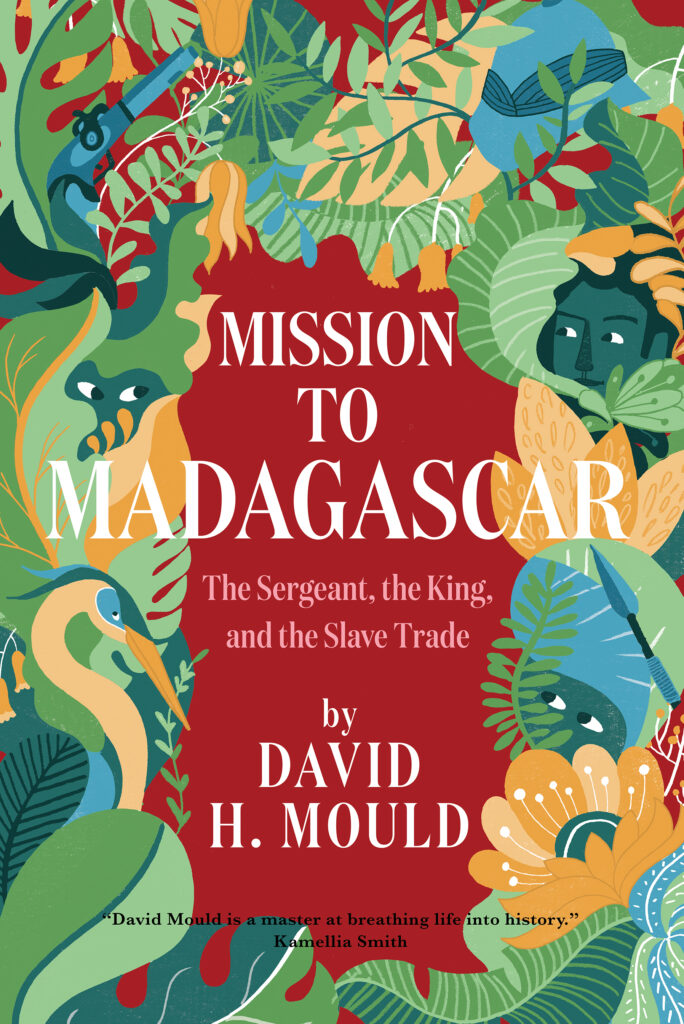
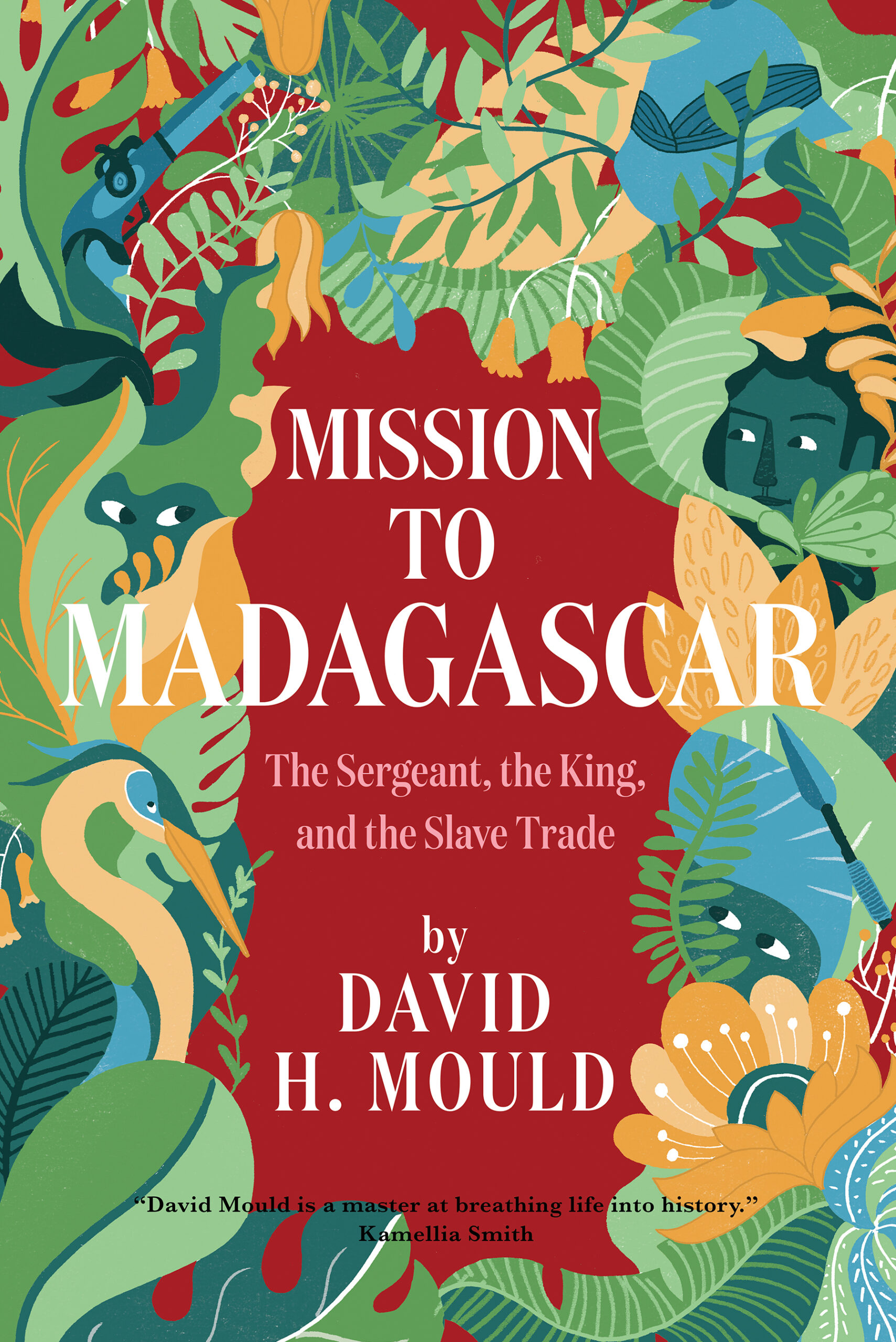
My 2023 Blackwater Press book, Mission to Madagascar: The Sergeant, the King, and the Slave Trade, describes how Hastie, a 30-year-old East India Company sergeant with no diplomatic training, brokered a treaty with Radama, the most powerful clan chief in Madagascar, to end the export of slaves to the plantations of Mauritius, the British island colony seized from the French during the Napoleonic Wars.
Hastie became the British envoy to Madagascar and Radama’s trusted advisor, arranging for the supply of British munitions and joining Radama on campaigns to subdue rival clans. He brought in artisans to teach trades, negotiated for the London Missionary Society to open schools, and supported Radama in his power struggle against traditionalist factions. Sir Mervyn Brown, a former UK ambassador and historian of Madagascar, described Hastie as “one of the most important and attractive figures in the history of Anglo-Malagasy relations.”
For more than a century, Hastie’s diaries, written between 1817 and 1826, have been regarded by historians as the most comprehensive and insightful early nineteenth-century traveler’s account of the island’s clans, economy and culture.
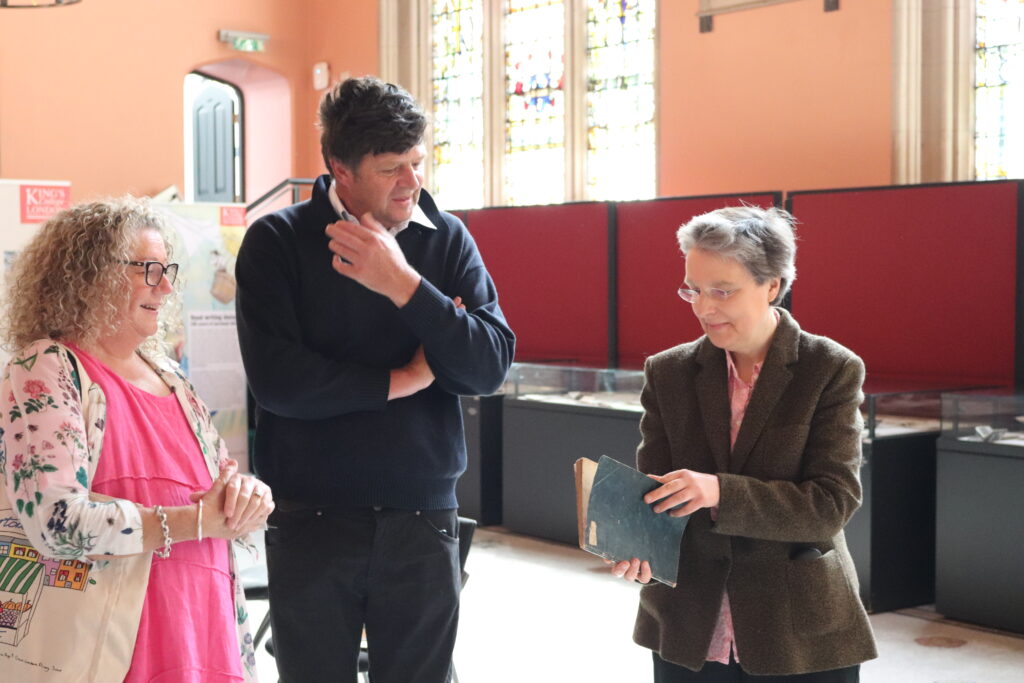
Paulette and John Parker with Katie Sambrook, Head of KCL Special Collections (holding diary)
The Parkers know they had found a valuable resource and learned that I had written Hastie’s biography. On November 29, John emailed me. He explained that the diary had been passed down to a Hastie descendant, his grandfather, P.H. Parker, who had emigrated from Britain to New Zealand after World War One. He had also brought with him an oil painting of Hastie and a child’s white smock top and redcoat’s uniform some children’s clothes, reportedly worn by Hastie’s son. John’s cousin had earlier donated the clothing to a museum in Madagascar’s capital, Antananarivo.
“Our issue [concerning the diary],” John wrote, “is what we should do with it and having seen you have recently written a book on the subject—you may be a good place to start.”
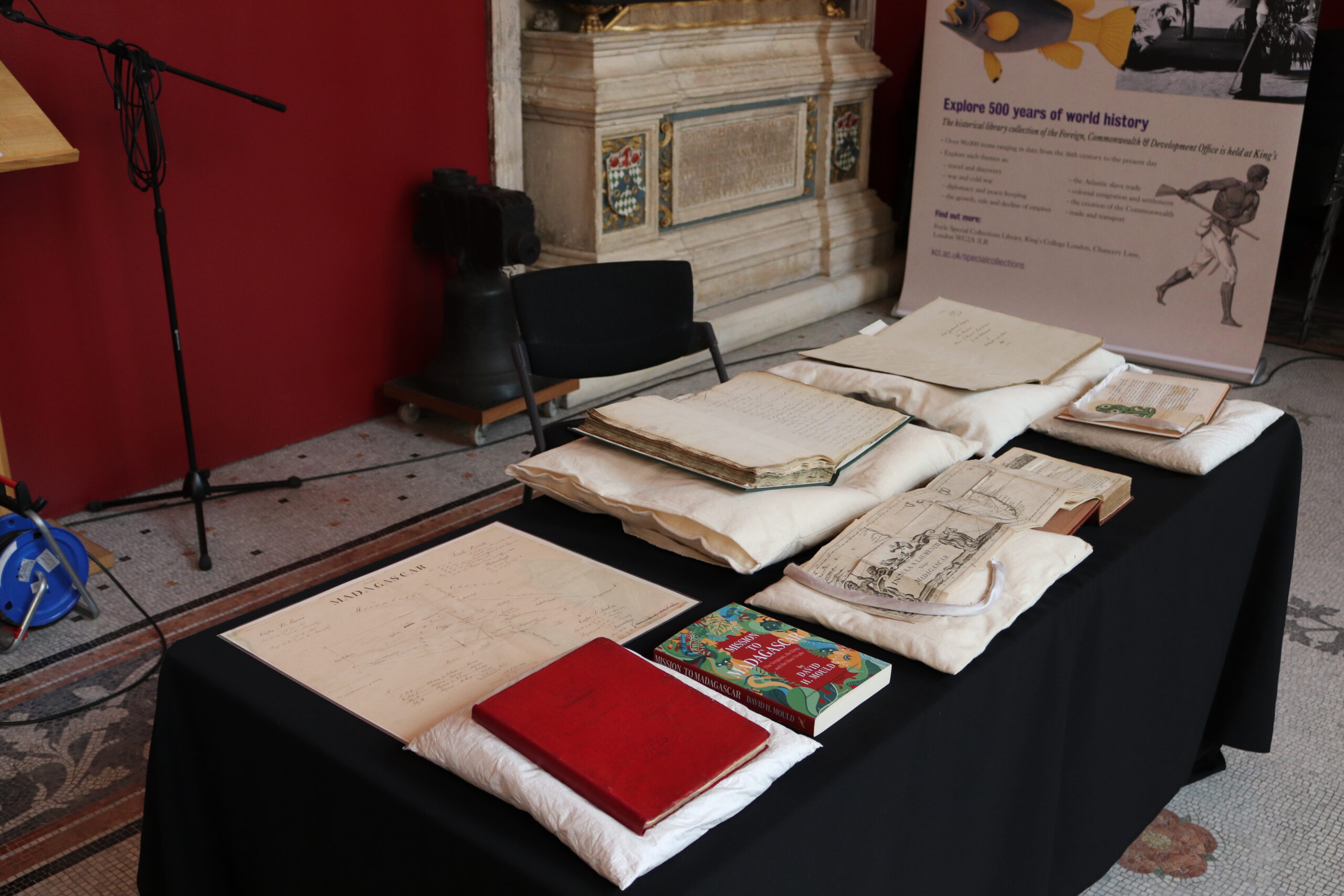
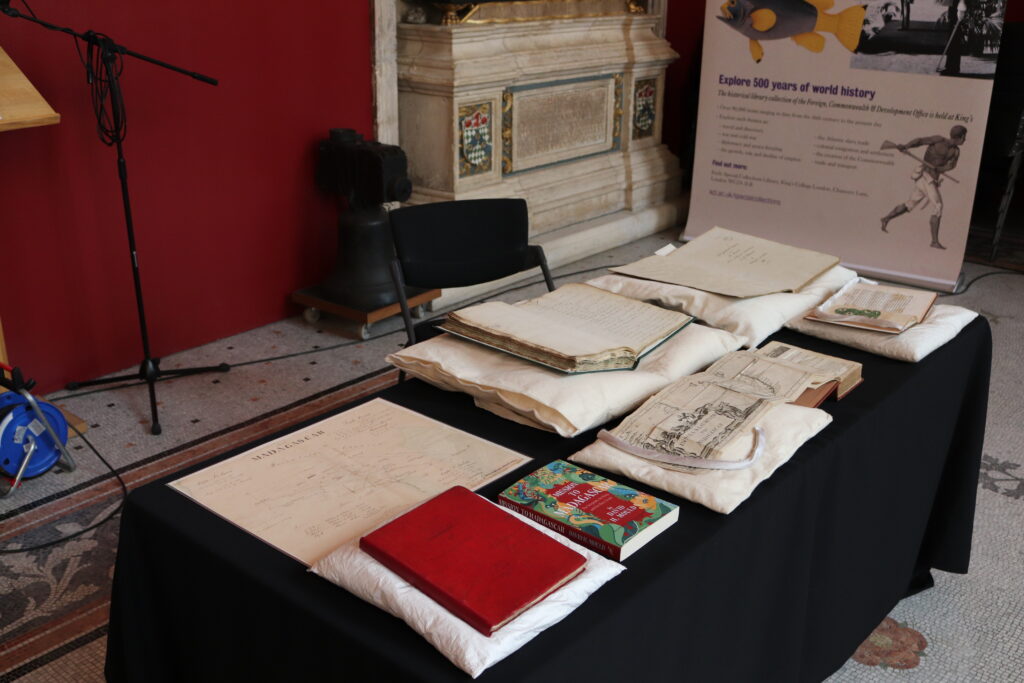
Display of Foyle Collections Madagascar archival materials and Mission to Madagascar
Within 24 hours, I was on a Zoom call with John, Paulette and John’s sister Diana. They showed me the diary, which covers the period from September 23 to October 22, 1817, when Hastie was navigating the politics of the Ovah court and building the personal relationship with Radama that led to the signing of the treaty banning the slave trade. The only known copy of Hastie’s diary for this crucial month went missing from the UK National Archives several years ago, leaving historians (me included) to rely on a 1903 French translation by the Academie Malgache.
I was, to put it mildly, thrilled. I advised the Parkers to deposit it at the King’s College London (KCL) Library, where the Foyle Special Collections already include an 1820 Hastie diary and the July 1817 diary of Thomas Locke Lewis, a naval lieutenant who arrived in Madagascar on the same ship as Hastie and conducted a reconnaissance mission before Hastie set out for the Ovah court in the central highlands. I had used both sources in my research, had a good working relationship with the Foyle archivist, Adam Ray, and had done the UK book launch at the library in June 2023.
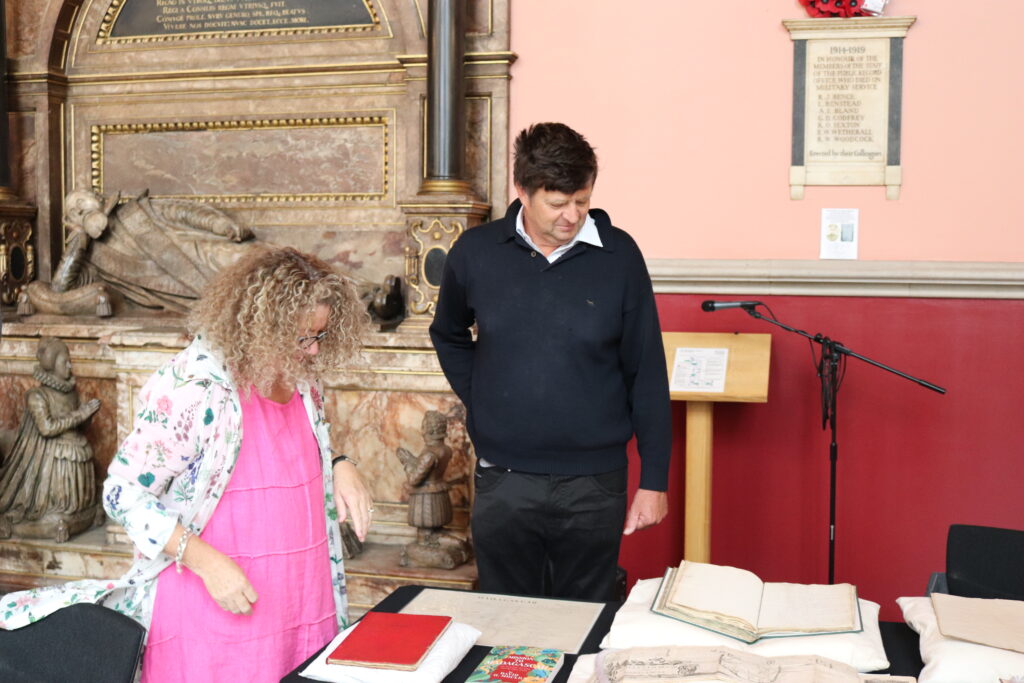
Paulette and John Parker with Foyle Collections Madagascar archival materials
The Parkers contacted the KCL Library and agreed to donate the diary, but said they wanted to do so in person. They did so in May 2024 at a special event held in the library’s historic Weston Room which included a display of the 1820 Hastie and 1817 Lewis diaries and other Madagascar artefacts from the Foyle Collections. KCL plans to digitize the 1817 diary so it will be available to all researchers.
James reaches New York City, by way of the secret branch of the Irish organization Clan na Gael, off-shoot of the Fenians and the Irish Republican Brotherhood, formed decades before to give aid to the many Irish immigrants arriving in America and Canada. He finds the older brother of his friend Sean, Peter MacSwiney, and though he is an illegal alien he works for a time with him. James’ adventures in America are a whole other story, filled with unlikely escapades, and wild characters. These stories will begin with James working for King Solomon, the Jewish gangster gunned down by the psychopath Lucky Luciano in a Boston restaurant, and end in upscale Manhattan, working for George Putnam and his wife, Amelia Earhart, at the exclusive Heigh Ho Club and later. He will make friends with Rudy Vallee, the famous crooner and a whole coterie of movers and shakers that frequented that swinging place in the carefree days before the Great Depression.
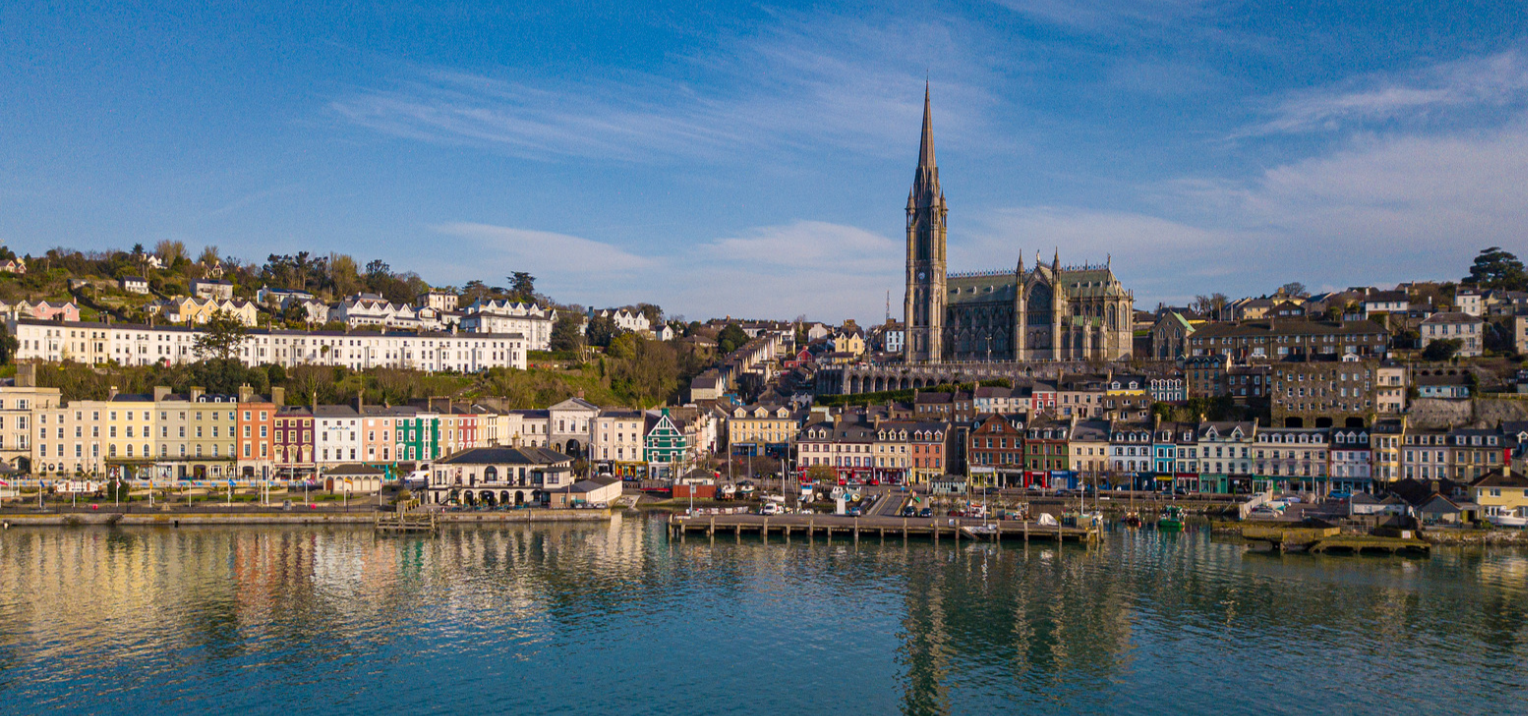
Before any of this gets rolling, one Sunday morning in 1924, sitting with a cup of tea, he reads a three-week-old copy of the Cork Examiner, his usual Sunday routine in those early years in America. He is surprised to find a ‘Most Wanted’ notice by the authorities (not the RIC or the Black and Tans, but the new National Guards) of Cork. The men listed? Most all of his former crew from C company, Mick Murphy, Sandow, Donovan, the Grey brothers, and on. Old friends and comrades. They are wanted for a drive by shooting at the still very British docks, in Cobh. (The main harbours of the country still belong to the British as part of the treaty.) It was here a young innocent 18-year-old British soldier was killed and more than 20 people wounded in a drive-by shooting. The paper describes this act as random and wanton. But James knows better. Whoever they were after, it was someone who was getting his comeuppance for whatever nasty deeds he was responsible for in the days of the War. James decides they must have missed their target. James’ friends, those who fought with him, those who believed that freedom could be taken, those who took the risks, did the necessary deeds to ensure that freedom, are described by the new president of Ireland, Cosgrave, as ‘dastardly.’ A L10,000 reward is put on their heads. It is barely a year since the end of the civil war, but already the anti-treaty men of Cork are excluded from any recognition of their courage or indeed devastating sacrifices that brought victory. His friends are on the run once again. Within weeks, every one of them will land in New York City, work the speakeasies and pine for home, where they will all return in a matter of months.
In 2006, the famous Rolls Royce Silver Ghost that they used for this deed, ‘The Moon Car’ so named for its bright yellow hue, will be found partially burned in an excavated dump on a lonely country property. All of Cork will get a taste of what those men must have felt like in that car, when the owner has the car restored to its original magnificence and goes on the road to show it off. Can they imagine the crew of men that ran full speed past the British with Lewis machine guns blazing? Highly unlikely. In 2020, the car will be donated to the National Museum of Ireland
When Frank Busteed shows up in New York City, James finds a kindred spirit. Frank is haunted, though he tries not to show it, enjoying life with a new wife and a new baby, and weekends with all of the Irish at Rockaway Beach, ‘The Irish Riviera’ according to New Yorkers. Pictures of the men together with their families and friends, Irish all, will show up on the internet, almost a hundred years later. James himself is sure not to be caught on camera. Frank, with welts under his eyes, sits on the sand holding the children. He wears a sad, troubled, expression. It is an expression that will reach out from most every photograph to be found of him as years go by.
1936
By 1936, James has spent over 12 years in New York city. He is married to a lovely Irish woman and has three young children. He has spent the last few years working for George Putnam, husband of Amelia Earhart. At first, he worked as doorman at the posh Heigh Ho Club in downtown Manhattan. The club co-owned by Putnam, lasted for a few years as the go-to club of the prohibition era for the upper echelons of Manhattan society. James knows just who to let through the doors and pay the exorbitant 15$ per head entrance fee. He develops a reputation as the no nonsense guardian of the establishment – not someone to be toyed with. 35 East 53rd street with its exotic paintings and art nouveau décor is the happening place for flapper girls, and movers and shakers alike. When the club shuts its doors during the depression, James continues to work for Putnam. As Amelia prepares for her around the world flight and the couple moves to California, James is offered a position. But the depression is over, the gangster’s day is done, America favors law abiding citizens. James must acquire legal status in order to become an American.
His wife is excited about a move to California. Though he has a young family in tow, he will travel home to get his papers. Papers that will allow him to emigrate legally as his wife had. He needn’t have bothered. No papers will be given. Indeed, it will take him eight years to overcome some unknown, latent enemy, undoubtedly a pro-treaty foe, in the great bureaucracy that oversees pensions for the warriors of the War of Independence. He will have to fight for the category of Officer of Cork No 1 Brigade, writing letter after letter, filling out form after form. Letters will be written on his behalf by Tom Crofts, by Florrie O’Donoghue, by Members of the Dail. Florrie himself, now a well-known historian and supporter of all things IRA, will claim, on his behalf, that the work undertaken by the few men of the Intelligence Squad, was the most dangerous work of all, and without those men, things could have turned out much differently.
James looks for work but will never find it in Cork. A return to New York, a move to California becomes an impossible dream. With Amelia’s disappearance in the midst of what is to be her daring flight around the world, in July of 1937, James knows his job prospects with Putnam have been lost with her. His young family, his beautiful wife, now pregnant, is distraught at living in his parent’s tiny home, without an income, their savings running dry. She makes a decision, dresses her children in their best New York attire and takes the train to the far-off countryside of her large family, full of brothers, farmers all. In Cork city, news of James’ return has spread. Old stories are resurrected in the pubs. He is known as a Republican, one of the crew that fought to the bitter end. There are no job offers. There are no jobs. Ireland has been in a slump since the initial blush of Free State government took over. Times are tough. Now he is looking for a job to support himself and his family, and any thought of a return to America has been buried under the harsh reality that is the new Ireland. He makes contact with O`Hegarty, who is grateful to have his job still at the Cork Workhouse. The name of this establishment, last resort of the poor, has changed with the departure of the British, but O`Hegarty is still the scrupulously honest manager who doles out supplies.
The two men observe each other. Well, says O`Hegarty, at least you`re not behind bars. Aye, says James. At least you are on the outside of the poor house looking in. O’Hegarty long ago used up the last of his favors. He is an aging man now, his contribution to the War of Independence forgotten by most. In fact, most want to forget the whole sordid mess. He will bury the love of his life, Magdalen, in 1940, live for twenty years without her and finally in 1963 be buried in a small graveyard beside her in Cork City. School children learn only about Tomas MacCurtain and Terence MacSwiney, both gone from the earth before the fighting really began. The Free State is happy to provide Irish language lessons to the new generations and quietly let the story of the bitter, cruel, often desperate fight that was the Irish War of Independence, slide into oblivion.
Sean is smoking a cigarette, leaning on the old stone wall near his family home as James approaches. His round wire spectacles sit atop his nose as ever they did. He wears a regular laborer’s clothing. His sleeves are rolled up, his thin suspenders hold up worn trousers, he wears thick leather boots, something like the Tans used to wear as they tore around the city. A beautiful young girl is standing beside him, chatting. She is lovely. For a moment James thinks it is Muriel, the most beautiful woman in the world. But of course, she is only about 18 years old, and Muriel was at least his age. Sean watches James approach and he smiles at his old friend. I told you to make a new life Jimmy. What the hell are you doing here? I don`t know Sean. It was good while it lasted, things are bad in the States now. Not as bad as they are here Jimmy. They will never be this bad. James grunts. He has realized this lately. You never came out. You said you would. I have my sisters here Jimmy. I couldn’t just desert them. And this is Mhaire, Terence’s daughter. She has been with us since Muriel decided to stay put in Paris. James nods at the beautiful girl. The resemblance to Muriel is uncanny.
Indeed, Mhaire escaped her depressed mother’s grasp with the help of Mary MacSwiney and the clause in Terrence’s will leaving joint custody to both wife and sister. Mary rescued her from a boarding school in Germany when she discovered her mother rarely visited the child. Mary brought her home to Ireland to the delight of the whole family. However, Muriel herself, the most beautiful woman in the world, will never forgive her own daughter’s complicity in the subterfuge and will refuse to speak to her for the rest of her days. She will live in Paris and London, a well-known member of the Communists and avant-garde artists of both cities. Terrence’s daughter, Mhaire will one day marry Ruairi, the son of the last person he wrote to, Cathal Brugha, and she will live a happy life. Her granddaughter will help her write her memoirs just before she dies at age 90. But at the minute, in Cork City in 1937, James and friend of his youth, Sean, stare at each other intently. So much has changed. And yet, everything is the same. Sean stoops to cough and hack violently. Smoker’s cough. He looks at James and memories of sitting in the Union Quay Barracks, the sweet taste of victory fresh on their breath, saturate James’ mind. Candles in the dark, dreaming of glory soon to descend on them. But James gives his head a shake. Of all people, Sean knows it was hell descended on them instead. To tell you the truth Jimmy, I just ran out of money. I wanted to come. My sisters have the school. They are getting by. But I couldn’t beg, borrow or steal the ship’s passage. It has been rough here since you left. Aye, Sean, I see that. ‘Twasn’t what we thought it would be. No indeed, Jimmy, the locals are apt to say we were better off under the British.
1938
James is desperate for work. His young family has remained at his wife’s family’s country home, there to live by way of the goodness of her brothers and sisters. It seems there is not a single job of any sort for a known Irregular of Cork. James goes to England and looks up his old IRA connections. At the age of 40 he gets a job as a bicycle courier in a small city in the centre of the country. For two horrible years, he lives in a rooming house and sends home what money he can.
1941
War ravages Europe. James hears the Americans are building bases in Ireland. He is first in line for a job and his quartermaster skills of long ago serve him well. He will work there for the length of the war, living at the base, coming home on the odd weekend to his growing family. They hardly know him.
1948
James is 50 years old. The Americans have packed up and left town. He is left to pound the pavement looking for a job. His wife works long hours by the fire, in the evenings, embroidering clothes and housewares for cash. Her former life, dancing in midtown Manhattan, having drinks with Amelia Earhart, that life has receded so far away, she wonders if it was all just a dream. James travels to Dublin where the men who once stoked the people into rebellion, now rule the world. He is politely turned down for any and all government jobs. As he is walking down the street wondering what on earth is to become of him and his family, he runs into a long-forgotten comrade from Cork. A man of much lesser rank in those far off days, but one who prospered under the Free State from the start. He recognizes James, once an Officer, an insider, a man with a hand in every shake down and take down and every episode of subterfuge against the British that he could think of. This man wonders aloud how the fearless, the risk takers, the leaders, the shining rays of hope to the young, how one such as this could have fallen so low. What is wrong with this country? he says to James. James shrugs. We are long forgotten is all. Long forgotten. Quietly now Sir, please follow me. And without a word to his contemporaries, he hires James to work in his department, in a pleasant office, pushing paper. For the next 25 years, James will work for the administration, grateful for the kindness shown him by one he could barely recall. At age 75 he will quietly retire.
1975
‘The Troubles’ ravage Ireland. The North is in upheaval, Catholic vs Protestant, Nationalists vs Ulster Unionists. British soldiers tear about Belfast and Londonderry and the major towns looking out for IRA. IRA tear about Belfast and Londonderry and the major towns looking out for British soldiers. The Ulster Defence Force, a civilian organization dedicated to obliterating the IRA joins the fray. James sits in his modest Dublin home and watches the carnage, the fires, the arrests, the kidnappings, the graffiti, the protests, on the evening news, day after day, year after year. He is 77 years old. His grown children come by to visit, grandchildren in tow. James sits in his comfortable three-piece suit, fancy socks emerging from his hiked-up trousers, and sips his evening shot of whiskey. His hair is long and white, carefully combed to cover the bullet wound in the back of his head. The bullet wound that none of his children, if they know about it, discuss, and none of his grandchildren know exists. They find their grandfather always welcoming, always polite, but stoic, and sometimes sad. They listen in surprise to his occasional outbursts while watching the news. ‘They should have let us just finish it. The eejits. Sure, Collins was on his way to fix it. It could have been done.’ But his grandchildren just shrug and go off to the kitchen, there to sip tea with their grandmother and dip their chocolate biscuits. After all, the North is far away, a different country altogether.
1990
James lies back and as the pain killers kick in, he does a mental survey. His children are fine. They have had a good run. Yes, his own family is safe. Unlike so many families he has been thinking of on and off lately. Families from before New York, from his childhood, his youth in Cork City. It is a miracle that I have survived my own life, he thinks to himself. All those years of madness. All those years living on the edge of disaster before New York and after. He looks at Ashe, but sure, there were a few good times, despite it all and a few adventures Ashe, that be the truth. Yes, we did it alright. We routed the enemy, though a heavy price we paid. All the boys who danced at the end of their ropes, all the boys who suffered. Like you Ashe. Like you. A heavy price indeed.
A nurse walks into the hospital room and checks his IV drip. James looks at her and thinks to himself, I know her. I know this girl. Her eyes are wide and luminous and intelligent, her smile sad. And then it comes to him, the most beautiful woman in the world – Terry’s wife.
Terry, how I worshipped him. And Tomas. One cannot think of one without the other. Two rebels, smart and fearless and bold, both with hearts of gold. And Sean. We knew each other’s secrets, so we did. He has been thinking of Sean this last while. Sean, who like him, was boycotted for years despite being the young brother of the famous Mayor. James didn’t even know until after he passed, dead of emphysema at 46 years old, and was quietly buried, his niece, Terry’s daughter, traumatized, but everyone else in the world happy to forget another anti-treaty IRA and let them and their story fade away into oblivion.
How old am I now, he thinks to himself? 92? No. 91. I will be 92 in a couple of weeks. I will not be here to celebrate! James chuckles to himself. He is looking forward to meeting up with his beautiful wife. He thinks of her in her shimmering flapper dress and matching cloche hat, dancing up a storm at the Heigh Ho. Wait for me, he calls out. I will be with you soon.
The old tinker woman was wrong. I will not make 92. He lays back and his mind wanders. Then suddenly he begins to laugh. I am in my 92nd year so I am. Why the old girl was right after all. I am in my 92nd year. James closes his eyes and sees the old woman, the drizzles of grey hair slipping from her bright red headscarf. She is holding his mother’s tea cup in the air. The shamrocks sparkle and dance in the streams of light coming through the window. He turns to Ashe, his old friend, who sits on the edge of the bed, in his straight jacket still. The slop and blood no longer gurgle from his mouth. Instead, his eyes twinkle and he sports a wide smile under his heavy moustache. James notices his hair is sparkling clean, the shiny curls framed around his handsome face. If it wasn`t for the straight jacket he would hardly know him.
I will tell you the truth Ashe, there have been days I wondered what it was all for, he whispers to his old friend. Ashe nods his head. Days during the fight and days long after it. Thinking on those times, I wonder why it had to be the way it all turned out. I can hardly make sense of it at all. Sometimes a terrible feeling of sadness comes over me and I remember so clearly walking the streets of Cork, dragging my heart behind me for the things I had to do. Wondering if the good Lord would ever forgive me. That was us Ashe, many a day, dragging our hearts behind us. Sure, we fought for freedom, but didn’t we carry our sins with us, our hearts too heavy for our own chests. But sure, somebody had to do it. ‘Twas just as Terry said, they would go when they couldn’t bear us any longer. And O’Hegarty, what a man he was, he knew just what to do. Give them back everything they ever gave us, and do it with bells on. ‘Twas the only way. Indeed Seamus, indeed. Ashe nods again. And then with a smile on his face, he points out, but you Seamus, despite it all, have been given a great gift. You have lived to tell the tale so you have!
James nods. Aye, tis true. A great gift indeed. The old tinker woman knew it, Ashe. Perhaps she really did see my future. There were times I reminded myself of her words and they gave me a tiny glimmer of hope, just enough to see me through to the light. But do you know what else she told me, Ashe? James struggles to sit up and look his old friend in the eye. She told me, ‘Life is a mystery. Don’t try to understand it. Sure, it doesn’t make any sense at all,’ she said. Wasn’t she just right, Ashe? Wasn’t she just right?
Today is World Book Day! What would the world be without books? Ugh, we don’t even want to go there.
We have a little fun planned for you. During the week starting from the 23rd April and ending on the 30th April, buy (or pre-order) any of our books from our website, and you’ll receive an extra SURPRISE Blackwater Press book for free! Kind of like a “blind date with a book”…but better.
If you have already purchased our books and want to make sure you don’t get a double, just pop us an e-mail at sales@blackwaterpress.com and we’ll make sure we exclude the title(s) from our random selection.
We look forward to surprising you with some of our favourite Blackwater reads!
We are always very grateful for our readers – both of our books, and of our newsletter. It’s tough to emerge in such a congested field, where competition is fierce and where publishing is, for better or worse, accessible to everyone.
Blackwater is small but feisty, and we wouldn’t be here without you all. If you follow us, it’s because you believe in our ethics, in the quality of our books, in independent publishing being the alternative to the choral voice of the mainstream. It’s thanks to readers like you that we exist, and thrive.
We are well aware of the world we live in, though, and it’s a world where the loudest are heard, and the flashiest are seen. It’s not easy to build user relationship when there are so many competitors and alternatives demanding attention.
How can we gain credibility? Well, a big part is played by reviews. Think about it: if you have to buy…anything, say a saucepan, or a jumper; or if you have to choose a restaurant, which do you pick? The ones with lots of positive reviews, or the one with only a few (or, even worse, lots of negative reviews)? We know the answer to that, and it’s only natural. Apparently between 92 and 98% of users take online opinions into consideration to help establish their own. And we understand that!
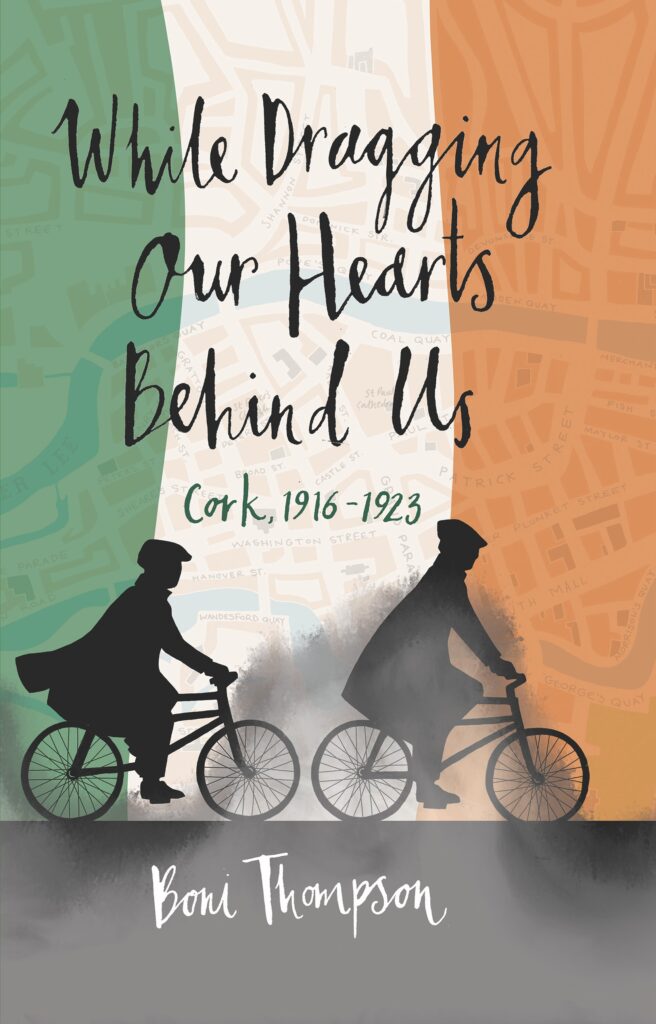
But aside from helping others choose their next read, reviews are important because they bump up the business SEOs. Plainly put: user-generated content helps the business’ online presence remain relevant and fresh, so that if you’re looking, for example, for a book about recent Irish history, our own While Dragging Our Hearts Behind Us by Boni Thompson will come up in the top results. Imagine you’re looking online for something, and you type the words in the search engine: how many pages will you click on before you start deeming the rest of the results less relevant? Not many, and that’s all SEO doings.
So, if you have a moment, please consider leaving reviews for your local shop, your small business owners…or your favourite independent publisher – hint hint, wink wink! On any platform: our own website, Amazon, Goodreads, social media…anywhere. It means a lot to us, and it really helps us grow and stay afloat in a shark-infested waters.
We know our latest news has been quite unsettling, and I’m sure it has given our gentle readers much food for thought.
But the show must go on…and what better way to celebrate the future of the publishing world than a bunch of exciting new books available for pre-order?
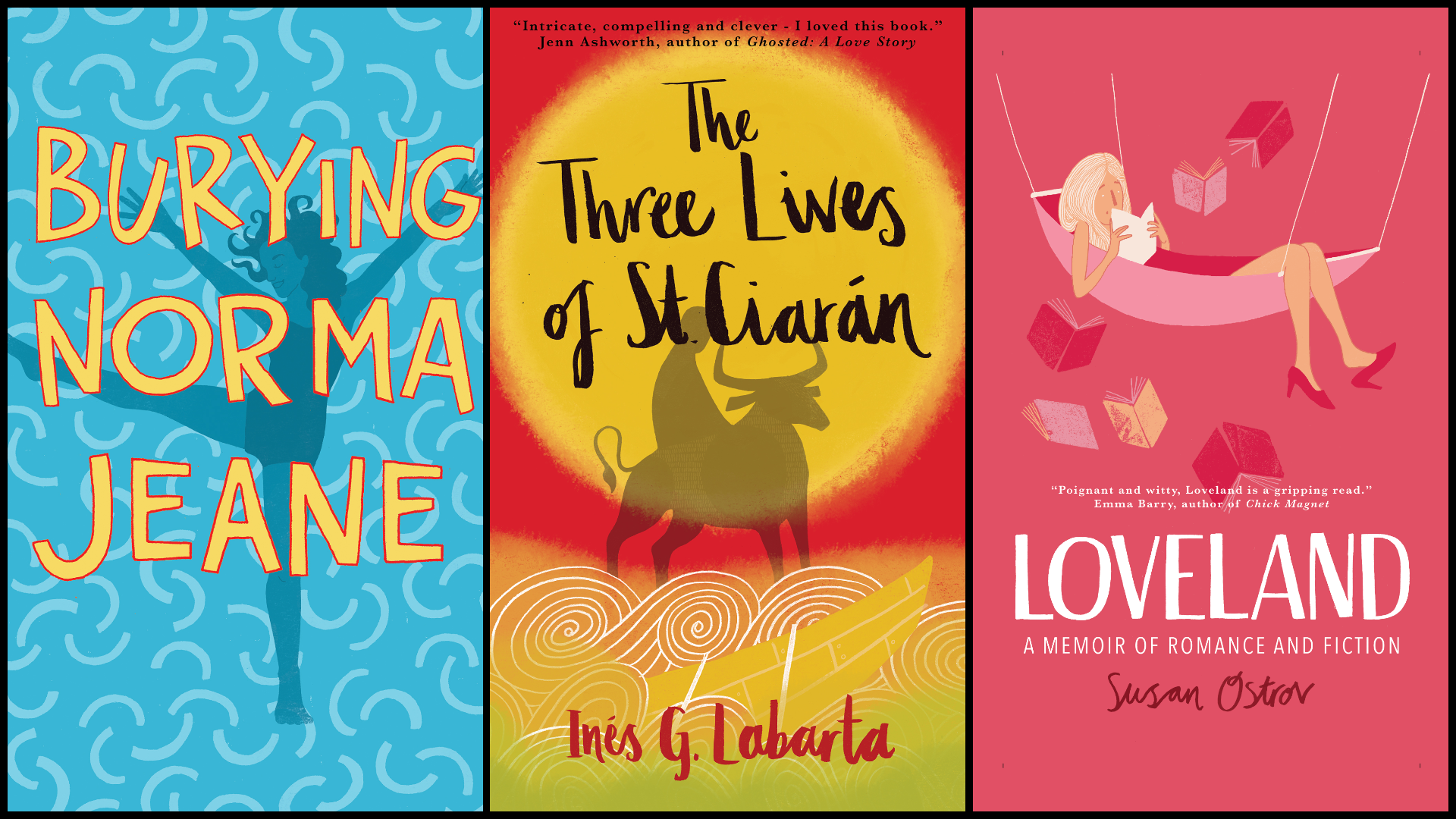
This book, my friends, is not for the faint-hearted. An experimental tripartite narration that delves deep into three very different dystopian scenarios, and dramatically different writing styles – from modern to epic to future – to bring to life three different versions of Saint Ciarán, to restore hope, faith, and brightness for humankind.
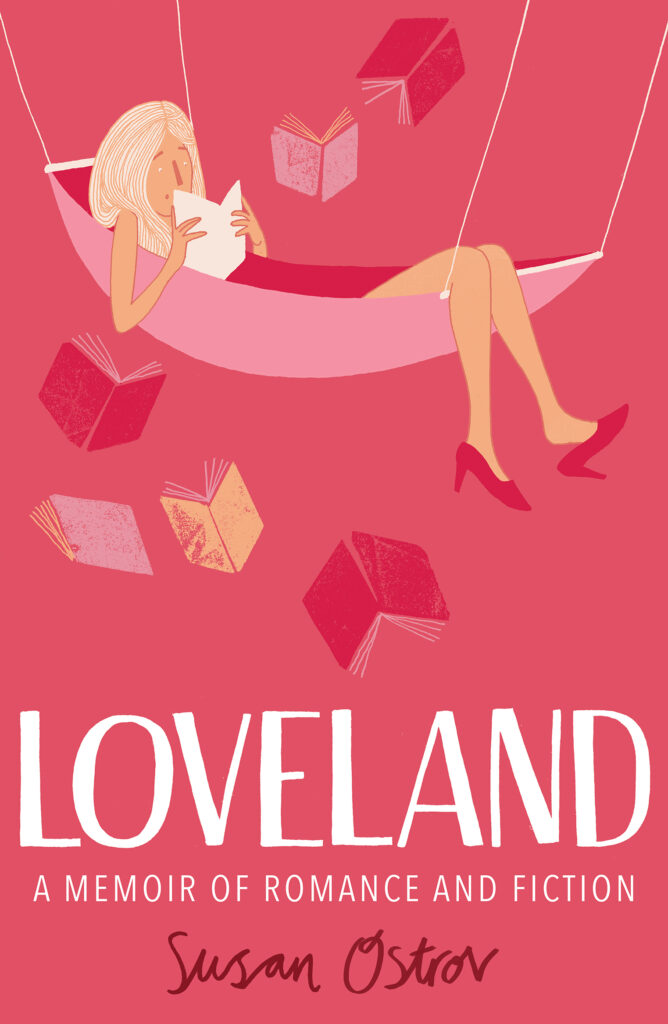
Next we have Loveland: a Memoir of Romance and Fiction, by Susan Ostrov. Do not be fooled by the title: do we look like the kind of press that publishes the book equivalent of candyfloss? We thought not. Blackwater candyfloss will always come fortified with nourishing substance. The backbone of this memoir is literature: the books we read shape our reality, and the author relates her personal romantic experiences to her perceptions of her reads, and their critical apparatus, discovering her true self relationship after relationship. And book after book.
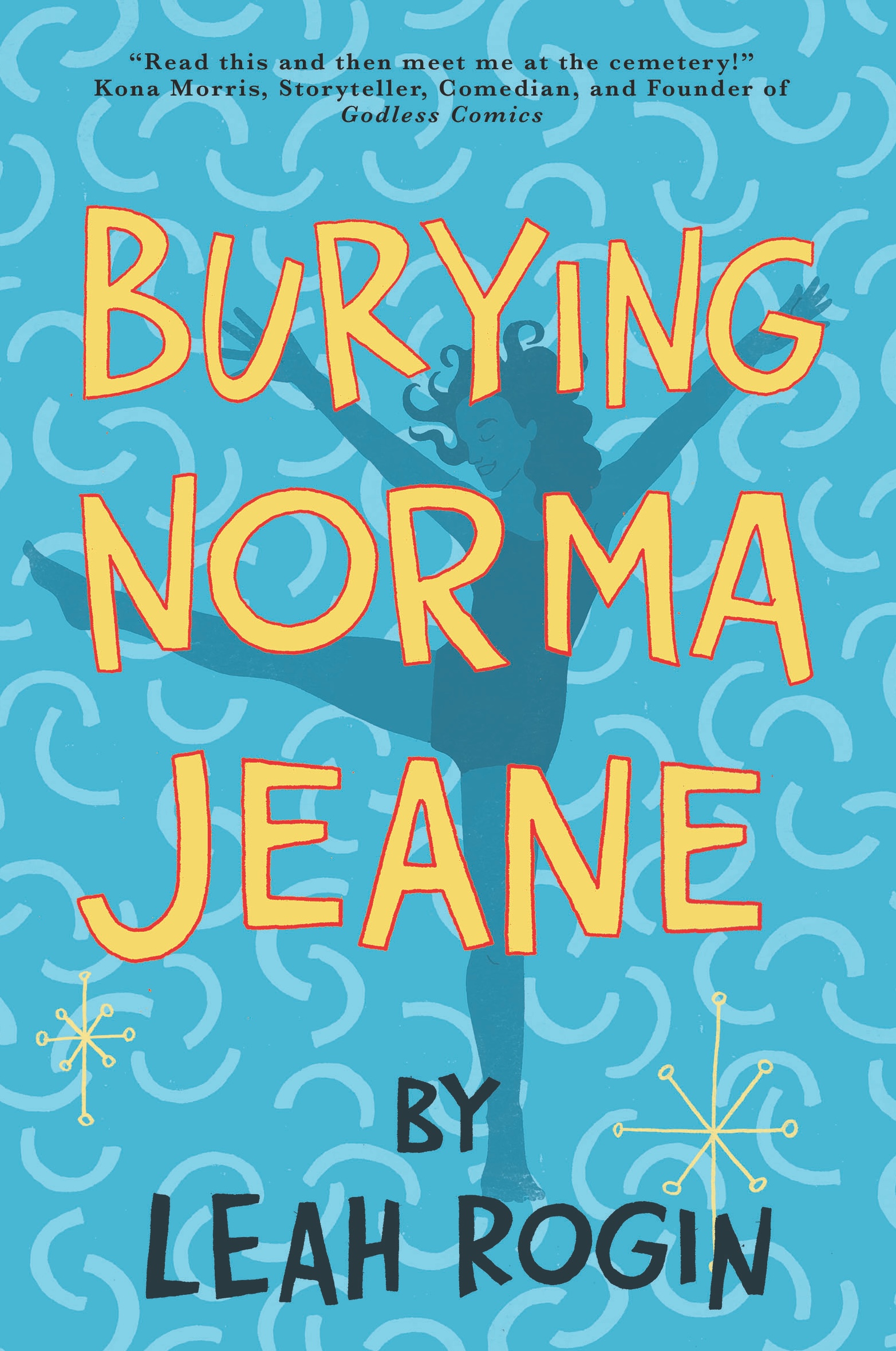
Finally, Burying Norma Jeane, by Leah Rogin. An on-the-road story that combines a deep understanding of the life and filmography of Marilyn Monroe (Norma Jeane), with a mother-daughter relationship under the timeless strains of the approach of the teenage phase that takes them both by surprise. All three women navigate the challenges of femininity, to a cathartic, liberating end.
On Thursday, our North American distributor, Small Press Distribution, announced that it had filed bankruptcy and ceased operations. We had no warning, or inclination at all, and our collective reaction can best be described as !!&*))@0@WTF))*(2 SPD….!!)__
Moving on. Why should you, gentle reader, care? Distribution and the supply chain are admittedly the least-sexy aspects of being a publisher, but still, important. And even without reference to Elizabeth’s powerpoint presentation on book distribution in North America, important to the general reader.
Here’s a Cliff’s Notes version: no one buys books from the publisher. Books go from publisher to distributor to wholesaler to shop. Shops like to support small presses and other small businesses, but at the end of the day also like to write one check. We can’t blame them; bookkeeping is hard. Hence book distributors, to do all the things we can’t do because of basic resources of time and manpower. Bookshop. Amazon (ahem. Not that any of us would ever use that for books…). Shops.
Again, what’s this have to do with you? A great deal. The closure of SPD will have a major and lasting impact on literary culture in the United States. We’re considering a number of solutions that will make us stronger, but we will never be able to compete with the big publishers. So, the best things you, our family of readers can do, is continue to support us by purchasing directly, leave reviews of our books on major sites (Goodreads, Amazon, Bookshop, Barnes and Noble, etc…) and, please, encourage your locally owned small bookshops to stock our titles and be in touch directly with us at sales [at] blackwaterpress.com.
This news only affects the US supply chain, and Elizabeth has plenty of copies of all titles on hand, but the same is true for the UK/Europe: please put your local shops in touch with Luca.
The month, we’re donating 25% of proceeds from sales of Guilt and Mission to Madagascar to Charleston’s Keep Your Faith Corporation. In this blog post, author David H. Mould explores the history of slavery in the British Empire.
Black History Month has given me reason to reflect on the history of slavery in Britain, the country where I was born and lived until my late twenties. Recently, the legacy of slavery and the issue of reparations to descendants of slaves has become a major topic of public and political debate. Universities, museums and corporations have been critically re-examining their own histories. Were their founders or benefactors slaveowners? Or did they, like the merchants and shipowners of London, Bristol, Liverpool and Glasgow, benefit indirectly through transporting slaves or the products of plantations? What is their modern-day responsibility for the acts of the past? Universities have established slavery research centers and grants for graduate students from communities of color, corporations have invested in diversity and community development programs. Statues of leading citizens connected to the slave trade have come tumbling down. Descendants of former slaveowners have come forward to offer apologies and, in some cases, financial restitution. Most of this history was new to me. If anything about Britain’s slave trade and plantation economies was in the school curriculum in the 1960s, it was buried under the weight of all those kings, queens, prime ministers, battles, treaties and acts of parliament whose deeds and misdeeds I had to regurgitate on tests. For centuries, the major colonial powers—the British, French, Dutch, Spanish and Portuguese—had engaged in an expanding slave trade from Africa to supply labor for their plantation colonies in the Caribbean and South America. In every country there was opposition to slavery on moral grounds, but economic interests always prevailed. In 1794, in a radical social reform by France’s new revolutionary regime, slavery was abolished. However, it was impossible to enforce the ban in the Caribbean colonies, where plantation owners threatened to secede to Britain where slavery was still legal. Slaves in Haiti rebelled and overthrew the French regime, but slavery remained in France’s other Caribbean colonies. After a long and well-financed campaign from the abolitionist movement, Britain became the first colonial power to ban the slave trade by act of parliament in 1807. The act did nothing to help those who were already enslaved. Economic interests again prevailed: to abolish slavery without importing a new labor force to the plantations would have spelled financial disaster, both for the owners and for Britain’s commercial and financial markets. It was more than a quarter century later, in 1834, that Britain abolished slavery in its colonies. For most slaves, “freedom” was a technical change in legal status; most became indentured laborers and saw little improvement in their living conditions. And the slaveowners were handsomely reimbursed for what was called their “loss of property.”
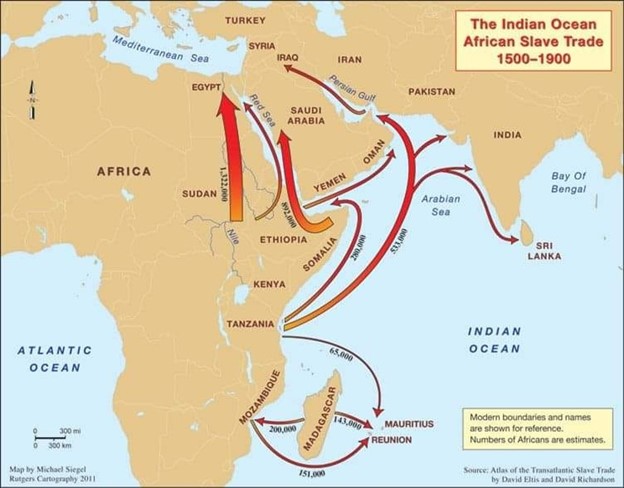
Map caption: Source: Atlas of the Transatlantic Slave Trade by David Ellis and David Richardson (Yale University Press, 2010)
When British and Americans think about the slave trade, they naturally focus on the transatlantic traffic from Africa to the Americas—to the United States, the Caribbean, and South America. It was not until I began research for Mission to Madagascar: The Sergeant, the King, and the Slave Trade that I began to understand that the slave trade was a global phenomenon. Slavery had existed in African societies for thousands of years. People, especially those without a family to protect them, were bought, sold, exchanged, or used to settle a debt. Captives taken in wars between tribes were ransomed to their relatives. Then the Arab traders arrived on the east coast of Africa and turned the local slave trade into an international business, with established supply routes and lines of credit for commercial goods to purchase slaves. The traders found willing partners in the tribes of the heavily populated Great Lakes region, a vast area that now comprises parts of western Kenya and Tanzania, Uganda, Rwanda, Burundi, Malawi, and the eastern Democratic Republic of Congo. Tribes raided villages, seizing men, women, and children. They exchanged them for the currency of the period—cloth goods imported from India, brass wire, beads, muskets, and gunpowder. With their guns, they took territory from weaker tribes and seized their cattle. When the supply of war captives dried up, they would find a pretext to start a new conflict. The traders assembled caravans of up to 1,000 slaves to march hundreds of miles to the coast, with bands of armed tribesmen to protect them from raids by local tribes. The traffic in slaves went hand in hand with the lucrative ivory trade, with male slaves carrying huge elephant tusks. The main entrepot was the island of Zanzibar, ruled by a dynasty from the Arabian Peninsula. From Zanzibar, their dhows carried slaves north to the markets of Arabia, Persia and India. Southeast of Zanzibar, the plantation economies of the islands of Mauritius and Bourbon (today Réunion) in the southwest Indian Ocean were completely dependent on slave labor. Where did the slaves come from? Most were shipped from the island of Madagascar. For centuries, warring clans had stolen cattle and taken war captives, who were ransomed to their families or kept as slaves. The arrival of French slave traders in the 18th century opened a new and lucrative market for captives. On the northwest coast, Arab traders shipped slaves captured in the interior across the Mozambique Channel. Some were marched to slave markets in the central highlands or to east coast ports for shipment to Mauritius and Bourbon, others sent north to Zanzibar. Mission to Madagascar, based on primary sources, recounts an almost forgotten chapter in the history of the global slave trade. Without enough naval ships to patrol the seas to stop smuggling, or the troops to mount an invasion, the governor of Mauritius, seized from the French during the Napoleonic Wars, opted for a diplomatic strategy. He decided to try to persuade Radama, the young, impetuous and warlike ruler of the rising military power in the island, to conclude a treaty to halt the export of slaves.
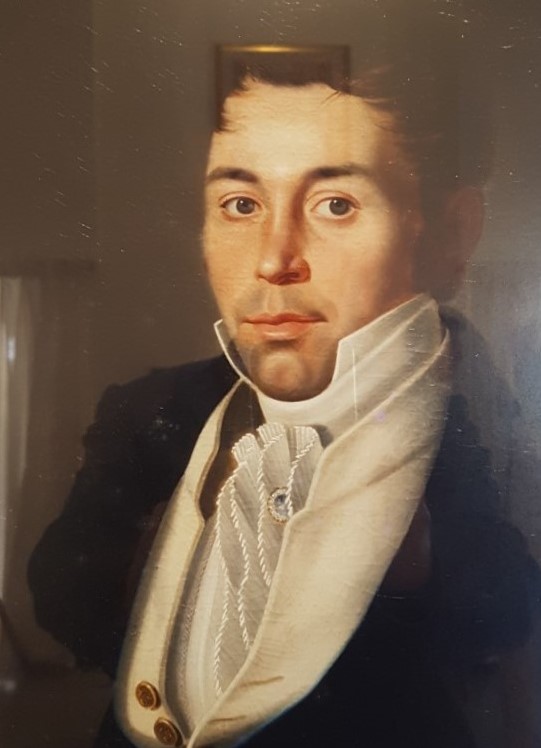
James Hastie
The unlikely hero of the story is James Hastie, a 30-year-old East India Company sergeant with no diplomatic experience, dispatched in 1817 to travel to Radama’s court. His journals recount how he used his wits and persuasive powers to win over the king who faced strong opposition from nobles, army commanders and clan chieftains who profited from the sale of slaves. The treaty ending the slave trade from Madagascar came at a price. Just as the British government later compensated the plantation owners of the Caribbean for their “loss of property,” the governor agreed to recompense Radama for his loss. The British trained his army, provided him with the muskets and gunpowder he needed to subdue rival clans, and recognized him as king of the whole island. The moral victory of ending the slave trade was tempered by political and economic expediency. Britain secured a powerful ally, kept the French out of Madagascar and gained favorable tariffs for its trading ships. Meanwhile, the internal slave trade in Madagascar continued unabated.
The Easter Rising of 1916 was one of the major events of the twentieth century that changed the map of Europe. Following a week of violence centered in Dublin, the men who led the fight were arrested and shot at Kilmainham Gaol, Dublin. The British hoped this was the end of the rebellion; it was just the beginning.
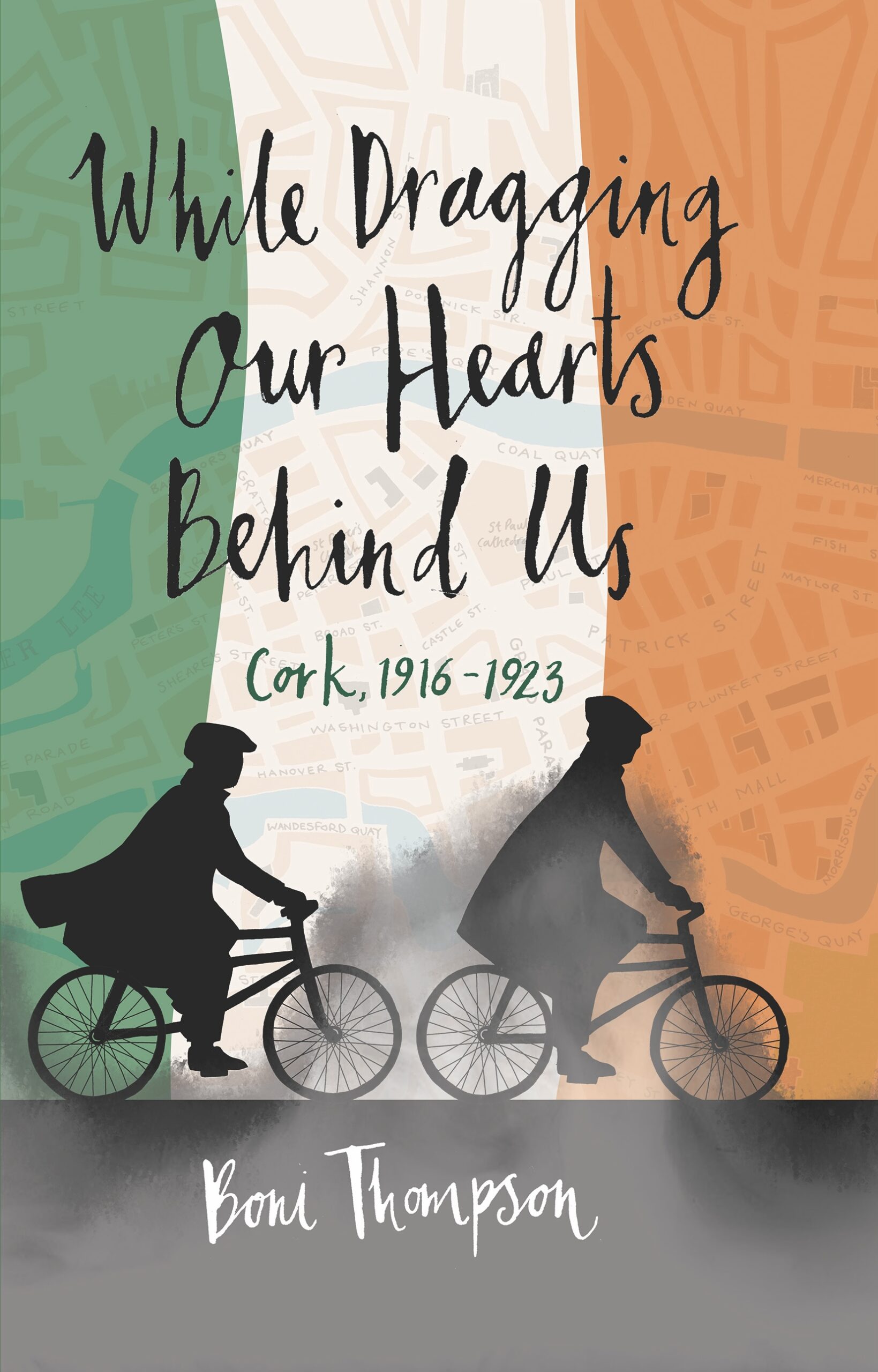
Our first book of 2024 is While Dragging Our Hearts Behind Us by Boni Thompson, based on her grandfather’s time as a significant part of the 1st Cork Brigade of the IRA during the Irish War of Independence (1919-1921). Read on for how Dr. Thompson combined family history, memoir, and archival research for a gripping and harrowing account of James Fitzgerald’s work for an independent Ireland.
Boni Thompson
The story of my grandfather, James, has been a long time coming. Partly because back in the 1990s when I started to research in earnest, (not so long ago, but definitely a pre-find everything-on-the-internet world), finding any new information about the Irish War of Independence here in Canada, information that was not hagiography, or hero worship, was nigh impossible. I knew I would have to go to Ireland, to Cork, to Dublin, and various university libraries, beg for access to rare and unique documents locked up behind closed doors, and do the research myself. Afterall, nobody that I could see was talking about any of the details of that war save a few well-known escapades. It was as if a few educated men, such as Éamon de Valera, Arthur Griffith, and a few secretive intelligence men like Michael Collins made the whole thing happen by magic. I knew by the stories my grandfather had told me that this was far from the truth. Since an extended stay in Ireland was out of the question, especially with a young family in tow, I shelved the whole project before it was even started.
A few years later, on a fine autumn afternoon, I was driving home listening to CBC radio, and over the airwaves a Canadian academic from Newfoundland was introduced, by the name of Peter Hart. When the title of his book was read out, The IRA and its enemies: Violence and Community in Cork, 1916-1923, I slowed down and turned up the volume. When the interview was over, I drove straight to my local bookstore and put in my order. I was excited to hear that somebody, and a Canadian no less, was writing about the many people in Cork, James’ contemporaries, who were involved in that terrible struggle. And not only that, he was writing about the clashes between the status quo and those who would destroy it, about the violence, about the widespread nature of the conflict and he certainly didn’t sugar coat the bloody details. I fully expected James to be mentioned. He was not.
What was mentioned, however, were versions of stories, versions I didn’t recognize, men’s actions described, violence categorized and tabled, but their stories missing. These men had their actions documented, but they were somehow detached from the context in which they lived their daily lives, overseen by occupiers from another country and of another race. They were described as engaging in sectarianism, concerned with religion or class of those they fought. These versions of men, young and old, did not mesh with my own version of my grandfather nor any of the friends, fellow IRA members, or the commanding officers that he had spoken of to me, with sadness, with respect, sometimes with humour and a chuckle. The short, and it is true, sanitized tales that he shared with me when I visited him always clearly communicated one specific thing: They were fighting to get back their country, in their own hands, a fight carried on from distant generations.
They faced before them a dangerous, treacherous enemy; an enemy manned with guns and weapons that were outlawed to Irishmen, men who represented a foreign king, who manned his gaols and his dungeons and his workhouses, and who would not go quietly from that island, nor would they willingly leave behind them over 700 years of administration, of fine homes and castles, of cheap labor and lucrative business and agriculture, all while many Irish suffered poverty, lack of education, lack of rights to their own language and culture, lack of opportunity for themselves and their children. This was the enemy they faced and it would take nothing less than courage, imagination, determination, resilience and yes, sometimes cruelty, in order to be successful and drive the enemy off their island, back where they came from.
In the end of course, they did it, and a high price they paid, those men who, like James, perpetrated acts of violence in the name of freedom. Some got tangled up in violence and were changed irrevocably because of it. Others were able to walk away, reconstitute themselves as law abiding citizens. I do believe however, the vast majority of them suffered, some their whole lives long. They suffered because their worldview did not include acts of intentional violence; acts that were clearly crossing lines, lines that had been drawn for them from time immemorial. However, it seems to me, they did what they felt they had to do, no more, no less, and even as the fight got worse, more terrible than they could have imagined, they kept on.
The Irish have them to thank, now, 100 years later, a prosperous nation, free of occupation, of greedy overlords, and foreign masters. I believe it is this fact, the fact that their actions contributed to winning freedom for the nation, that allowed them to return to a normal life, despite being haunted by their youths. A life where their children had opportunities they could never have dreamed of in their own youths, because of that freedom, so hard won.
It was not easy to write my grandfather’s story. He was most definitely an insider in the centre of Cork, very close to the command structure of the IRA. The men he worked with and for understood what it meant to be an Irish Rebel fighting for their country, and the depth of resolve it took to stay with the fight, despite hardship, danger, and threats to family. This common connection with a secret knowledge of each other and what each was capable of bound them tightly together in their common task, so tightly some would suffer under torture and death before divulging information of each other. It was hard to read of kidnappings and executions, harder still to write of him participating in them. But his words stayed with me at such times, that he was a soldier of Ireland, fighting a foreign enemy, and given the history of Ireland, an often cruel and heartless one. He saw his compatriots as like-minded, trustworthy, mostly good men, strong men, doing what they believed had to be done, despite the offensive nature of some of their tasks.
The violence perpetrated by the IRA, much of it reactionary, is only a small part of the story. The way they are portrayed in academic work, gave me the impetus to tell my grandfather’s story differently, in contrast. That is, I had to tell the larger story, the context of his life and times, from his point of view, in order to see how he saw and feel how he felt in order to act in the ways he and his compatriots did. I tried to write of those historic years, 1916-1923 in Cork in such a way that his world is made apparent to us. I wanted to be true to the facts as they stand, but also, light had to be shed on the inner lives of James and his colleagues in order to have a chance at revealing the world in which those young men and women lived, their own bubble of time and place.
I did not know how I could do this without much more information. A librarian at the National Library of Ireland suggested posting an advertisement in the Cork paper. It seemed like a crazy idea to me… after all, this was the late 1990s and James had left us 10 ten years earlier at the age of 92. But in only a few short weeks, I found in my mailbox a lovely letter from a man whose mother had grown up a few doors down from James. She remembered the family well, but not James. She did mention that the younger brother had blown off his fingertips making bombs. Such a fabulous detail to build a story on! I was delighted and grateful. I wrote letters to distant relatives who had been children when James was in his 20s and 30s. They told me the hard truth. He was a difficult man in those years. I brooded on this information.
It was not until I found the newly launched compendium of witness statements posted by the Irish government after 2000 that suddenly telling his story seemed possible. I was disappointed to discover that he himself did not leave a statement, or if he did it was not included. There were however descriptions of actions taken where he was present, mentions of his attachment to headquarters, the intelligence squad, the active service unit, even the day he was shot in the head and taken to Victoria Barracks. This was exactly what I needed, but still not enough to write a full story, a story that was truly authentic and thorough.
I called up a professor at University College Cork history department. A kind and generous man, he knew of James and advised me to apply for his pension application. That took what seemed like forever, two years and two phone calls to the Irish civil department responsible. On the phone the woman in charge apologized for the delay. She said that some applications may never be made public because of the sensitive nature of the disclosures made therein. She suggested that James’s application was such a one. Shortly thereafter it arrived, a fat package of photocopied documents, letters from his old friends, some, at the time men in high places, recommending him for an officer’s pension, scolding the bureaucracy for taking so long in their deliberations. But the document that made his story possible was the list of actions that he undertook, written in his own hand, all verified by witnesses. It is a long list.
By this time, of course, the age of the internet was up and running, and so with this document I sat down and created a timeline of events, where he fit in, who he worked with, what was in the newspapers that day or evening, even the weather conditions, and tried through each event to see inside his world, indeed inside his head. From a carefree 17-year-old at the time of the Easter Rising through to the tough, hardened young man of 25 years old, who after watching beloved leaders and good friends alike suffer and die, kept the faith through it all.
I will say that this is something I still do not truly grasp, despite almost three years researching and writing about James, my grandfather. The rebel spirit in defence of a nation, of an ideal of freedom, a spirit that will not die, will not succumb, will not be cowed or broken or bought. Winston Churchill famously once said, “We have always found the Irish quite odd. They refuse to be English.” And later when speaking of the Irish Free State Act, asked the rhetorical question, “How much have we suffered in all these generations from this continued hostility?” Such statements could only be pronounced by victors, wishing to hide their culpability and reframe their guilt. We forgive Churchill, having led the world in the fight against the great evil that was Nazism, never giving up or giving in, hanging on with dogged tenacity despite setback after setback and a fierce, terrifying, enemy. Perhaps Churchill had learned something more from the Irish then what he proclaimed. Perhaps we have more to thank Irish rebels for than we realize.
While Dragging Our Hearts Behind Us is already available as e-book on our web site, and pre-orders for print copies are open; publication date is March 17. We also offer an e-book + paperback bundle at a special price! To secure yours, just select ‘bundle’ in the drop-down ‘edition’ menu on our website.