Author: admin

  • Black History Month: Mission to Madagascar

    Black History Month: Mission to Madagascar

    The month, we’re donating 25% of proceeds from sales of Guilt and Mission to Madagascar to Charleston’s Keep Your Faith Corporation. In this blog post, author David H. Mould explores the history of slavery in the British Empire.


    Black History Month has given me reason to reflect on the history of slavery in Britain, the country where I was born and lived until my late twenties.
    Recently, the legacy of slavery and the issue of reparations to descendants of slaves has become a major topic of public and political debate. Universities, museums and corporations have been critically re-examining their own histories. Were their founders or benefactors slaveowners? Or did they, like the merchants and shipowners of London, Bristol, Liverpool and Glasgow, benefit indirectly through transporting slaves or the products of plantations? What is their modern-day responsibility for the acts of the past?
    Universities have established slavery research centers and grants for graduate students from communities of color, corporations have invested in diversity and community development programs. Statues of leading citizens connected to the slave trade have come tumbling down. Descendants of former slaveowners have come forward to offer apologies and, in some cases, financial restitution.
    Most of this history was new to me. If anything about Britain’s slave trade and plantation economies was in the school curriculum in the 1960s, it was buried under the weight of all those kings, queens, prime ministers, battles, treaties and acts of parliament whose deeds and misdeeds I had to regurgitate on tests.
    For centuries, the major colonial powers—the British, French, Dutch, Spanish and Portuguese—had engaged in an expanding slave trade from Africa to supply labor for their plantation colonies in the Caribbean and South America. In every country there was opposition to slavery on moral grounds, but economic interests always prevailed.
    In 1794, in a radical social reform by France’s new revolutionary regime, slavery was abolished. However, it was impossible to enforce the ban in the Caribbean colonies, where plantation owners threatened to secede to Britain where slavery was still legal. Slaves in Haiti rebelled and overthrew the French regime, but slavery remained in France’s other Caribbean colonies.
    After a long and well-financed campaign from the abolitionist movement, Britain became the first colonial power to ban the slave trade by act of parliament in 1807. The act did nothing to help those who were already enslaved. Economic interests again prevailed: to abolish slavery without importing a new labor force to the plantations would have spelled financial disaster, both for the owners and for Britain’s commercial and financial markets.
    It was more than a quarter century later, in 1834, that Britain abolished slavery in its colonies. For most slaves, “freedom” was a technical change in legal status; most became indentured laborers and saw little improvement in their living conditions. And the slaveowners were handsomely reimbursed for what was called their “loss of property.”

    Map caption: Source: Atlas of the Transatlantic Slave Trade by David Ellis and David Richardson (Yale University Press, 2010)

    When British and Americans think about the slave trade, they naturally focus on the transatlantic traffic from Africa to the Americas—to the United States, the Caribbean, and South America. It was not until I began research for Mission to Madagascar: The Sergeant, the King, and the Slave Trade that I began to understand that the slave trade was a global phenomenon.
    Slavery had existed in African societies for thousands of years. People, especially those without a family to protect them, were bought, sold, exchanged, or used to settle a debt. Captives taken in wars between tribes were ransomed to their relatives. Then the Arab traders arrived on the east coast of Africa and turned the local slave trade into an international business, with established supply routes and lines of credit for commercial goods to purchase slaves.
    The traders found willing partners in the tribes of the heavily populated Great Lakes region, a vast area that now comprises parts of western Kenya and Tanzania, Uganda, Rwanda, Burundi, Malawi, and the eastern Democratic Republic of Congo. Tribes raided villages, seizing men, women, and children. They exchanged them for the currency of the period—cloth goods imported from India, brass wire, beads, muskets, and gunpowder. With their guns, they took territory from weaker tribes and seized their cattle. When the supply of war captives dried up, they would find a pretext to start a new conflict.
    The traders assembled caravans of up to 1,000 slaves to march hundreds of miles to the coast, with bands of armed tribesmen to protect them from raids by local tribes. The traffic in slaves went hand in hand with the lucrative ivory trade, with male slaves carrying huge elephant tusks. The main entrepot was the island of Zanzibar, ruled by a dynasty from the Arabian Peninsula. From Zanzibar, their dhows carried slaves north to the markets of Arabia, Persia and India.
    Southeast of Zanzibar, the plantation economies of the islands of Mauritius and Bourbon (today Réunion) in the southwest Indian Ocean were completely dependent on slave labor. Where did the slaves come from? Most were shipped from the island of Madagascar.
    For centuries, warring clans had stolen cattle and taken war captives, who were ransomed to their families or kept as slaves. The arrival of French slave traders in the 18th century opened a new and lucrative market for captives. On the northwest coast, Arab traders shipped slaves captured in the interior across the Mozambique Channel. Some were marched to slave markets in the central highlands or to east coast ports for shipment to Mauritius and Bourbon, others sent north to Zanzibar.
    Mission to Madagascar, based on primary sources, recounts an almost forgotten chapter in the history of the global slave trade. Without enough naval ships to patrol the seas to stop smuggling, or the troops to mount an invasion, the governor of Mauritius, seized from the French during the Napoleonic Wars, opted for a diplomatic strategy. He decided to try to persuade Radama, the young, impetuous and warlike ruler of the rising military power in the island, to conclude a treaty to halt the export of slaves.

    James Hastie
    James Hastie

    The unlikely hero of the story is James Hastie, a 30-year-old East India Company sergeant with no diplomatic experience, dispatched in 1817 to travel to Radama’s court. His journals recount how he used his wits and persuasive powers to win over the king who faced strong opposition from nobles, army commanders and clan chieftains who profited from the sale of slaves.
    The treaty ending the slave trade from Madagascar came at a price. Just as the British government later compensated the plantation owners of the Caribbean for their “loss of property,” the governor agreed to recompense Radama for his loss. The British trained his army, provided him with the muskets and gunpowder he needed to subdue rival clans, and recognized him as king of the whole island.
    The moral victory of ending the slave trade was tempered by political and economic expediency. Britain secured a powerful ally, kept the French out of Madagascar and gained favorable tariffs for its trading ships. Meanwhile, the internal slave trade in Madagascar continued unabated.

  • Rebel Cork

    Rebel Cork

    The Easter Rising of 1916 was one of the major events of the twentieth century that changed the map of Europe. Following a week of violence centered in Dublin, the men who led the fight were arrested and shot at Kilmainham Gaol, Dublin. The British hoped this was the end of the rebellion; it was just the beginning.

    Our first book of 2024 is While Dragging Our Hearts Behind Us by Boni Thompson, based on her grandfather’s time as a significant part of the 1st Cork Brigade of the IRA during the Irish War of Independence (1919-1921). Read on for how Dr. Thompson combined family history, memoir, and archival research for a gripping and harrowing account of James Fitzgerald’s work for an independent Ireland.

    Boni Thompson

    The story of my grandfather, James, has been a long time coming. Partly because back in the 1990s when I started to research in earnest, (not so long ago, but definitely a pre-find everything-on-the-internet world), finding any new information about the Irish War of Independence here in Canada, information that was not hagiography, or hero worship, was nigh impossible. I knew I would have to go to Ireland, to Cork, to Dublin, and various university libraries, beg for access to rare and unique documents locked up behind closed doors, and do the research myself. Afterall, nobody that I could see was talking about any of the details of that war save a few well-known escapades. It was as if a few educated men, such as Éamon de Valera, Arthur Griffith, and a few secretive intelligence men like Michael Collins made the whole thing happen by magic. I knew by the stories my grandfather had told me that this was far from the truth. Since an extended stay in Ireland was out of the question, especially with a young family in tow, I shelved the whole project before it was even started.

    A few years later, on a fine autumn afternoon, I was driving home listening to CBC radio, and over the airwaves a Canadian academic from Newfoundland was introduced, by the name of Peter Hart. When the title of his book was read out, The IRA and its enemies: Violence and Community in Cork, 1916-1923, I slowed down and turned up the volume. When the interview was over, I drove straight to my local bookstore and put in my order. I was excited to hear that somebody, and a Canadian no less, was writing about the many people in Cork, James’ contemporaries, who were involved in that terrible struggle. And not only that, he was writing about the clashes between the status quo and those who would destroy it, about the violence, about the widespread nature of the conflict and he certainly didn’t sugar coat the bloody details. I fully expected James to be mentioned. He was not.

    What was mentioned, however, were versions of stories, versions I didn’t recognize, men’s actions described, violence categorized and tabled, but their stories missing. These men had their actions documented, but they were somehow detached from the context in which they lived their daily lives, overseen by occupiers from another country and of another race. They were described as engaging in sectarianism, concerned with religion or class of those they fought. These versions of men, young and old, did not mesh with my own version of my grandfather nor any of the friends, fellow IRA members, or the commanding officers that he had spoken of to me, with sadness, with respect, sometimes with humour and a chuckle. The short, and it is true, sanitized tales that he shared with me when I visited him always clearly communicated one specific thing: They were fighting to get back their country, in their own hands, a fight carried on from distant generations.

    They faced before them a dangerous, treacherous enemy; an enemy manned with guns and weapons that were outlawed to Irishmen, men who represented a foreign king, who manned his gaols and his dungeons and his workhouses, and who would not go quietly from that island, nor would they willingly leave behind them over 700 years of administration, of fine homes and castles, of cheap labor and lucrative business and agriculture, all while many Irish suffered poverty, lack of education, lack of rights to their own language and culture, lack of opportunity for themselves and their children. This was the enemy they faced and it would take nothing less than courage, imagination, determination, resilience and yes, sometimes cruelty, in order to be successful and drive the enemy off their island, back where they came from.

    In the end of course, they did it, and a high price they paid, those men who, like James, perpetrated acts of violence in the name of freedom. Some got tangled up in violence and were changed irrevocably because of it. Others were able to walk away, reconstitute themselves as law abiding citizens. I do believe however, the vast majority of them suffered, some their whole lives long. They suffered because their worldview did not include acts of intentional violence; acts that were clearly crossing lines, lines that had been drawn for them from time immemorial. However, it seems to me, they did what they felt they had to do, no more, no less, and even as the fight got worse, more terrible than they could have imagined, they kept on.

    The Irish have them to thank, now, 100 years later, a prosperous nation, free of occupation, of greedy overlords, and foreign masters. I believe it is this fact, the fact that their actions contributed to winning freedom for the nation, that allowed them to return to a normal life, despite being haunted by their youths. A life where their children had opportunities they could never have dreamed of in their own youths, because of that freedom, so hard won.

    It was not easy to write my grandfather’s story. He was most definitely an insider in the centre of Cork, very close to the command structure of the IRA. The men he worked with and for understood what it meant to be an Irish Rebel fighting for their country, and the depth of resolve it took to stay with the fight, despite hardship, danger, and threats to family. This common connection with a secret knowledge of each other and what each was capable of bound them tightly together in their common task, so tightly some would suffer under torture and death before divulging information of each other. It was hard to read of kidnappings and executions, harder still to write of him participating in them. But his words stayed with me at such times, that he was a soldier of Ireland, fighting a foreign enemy, and given the history of Ireland, an often cruel and heartless one. He saw his compatriots as like-minded, trustworthy, mostly good men, strong men, doing what they believed had to be done, despite the offensive nature of some of their tasks.

    The violence perpetrated by the IRA, much of it reactionary, is only a small part of the story. The way they are portrayed in academic work, gave me the impetus to tell my grandfather’s story differently, in contrast. That is, I had to tell the larger story, the context of his life and times, from his point of view, in order to see how he saw and feel how he felt in order to act in the ways he and his compatriots did. I tried to write of those historic years, 1916-1923 in Cork in such a way that his world is made apparent to us. I wanted to be true to the facts as they stand, but also, light had to be shed on the inner lives of James and his colleagues in order to have a chance at revealing the world in which those young men and women lived, their own bubble of time and place.

    I did not know how I could do this without much more information. A librarian at the National Library of Ireland suggested posting an advertisement in the Cork paper. It seemed like a crazy idea to me… after all, this was the late 1990s and James had left us 10 ten years earlier at the age of 92. But in only a few short weeks, I found in my mailbox a lovely letter from a man whose mother had grown up a few doors down from James. She remembered the family well, but not James. She did mention that the younger brother had blown off his fingertips making bombs. Such a fabulous detail to build a story on! I was delighted and grateful. I wrote letters to distant relatives who had been children when James was in his 20s and 30s. They told me the hard truth. He was a difficult man in those years. I brooded on this information.

    It was not until I found the newly launched compendium of witness statements posted by the Irish government after 2000 that suddenly telling his story seemed possible. I was disappointed to discover that he himself did not leave a statement, or if he did it was not included. There were however descriptions of actions taken where he was present, mentions of his attachment to headquarters, the intelligence squad, the active service unit, even the day he was shot in the head and taken to Victoria Barracks. This was exactly what I needed, but still not enough to write a full story, a story that was truly authentic and thorough.

    I called up a professor at University College Cork history department. A kind and generous man, he knew of James and advised me to apply for his pension application. That took what seemed like forever, two years and two phone calls to the Irish civil department responsible. On the phone the woman in charge apologized for the delay. She said that some applications may never be made public because of the sensitive nature of the disclosures made therein. She suggested that James’s application was such a one. Shortly thereafter it arrived, a fat package of photocopied documents, letters from his old friends, some, at the time men in high places, recommending him for an officer’s pension, scolding the bureaucracy for taking so long in their deliberations. But the document that made his story possible was the list of actions that he undertook, written in his own hand, all verified by witnesses. It is a long list.

    By this time, of course, the age of the internet was up and running, and so with this document I sat down and created a timeline of events, where he fit in, who he worked with, what was in the newspapers that day or evening, even the weather conditions, and tried through each event to see inside his world, indeed inside his head. From a carefree 17-year-old at the time of the Easter Rising through to the tough, hardened young man of 25 years old, who after watching beloved leaders and good friends alike suffer and die, kept the faith through it all.

    I will say that this is something I still do not truly grasp, despite almost three years researching and writing about James, my grandfather. The rebel spirit in defence of a nation, of an ideal of freedom, a spirit that will not die, will not succumb, will not be cowed or broken or bought. Winston Churchill famously once said, “We have always found the Irish quite odd. They refuse to be English.” And later when speaking of the Irish Free State Act, asked the rhetorical question, “How much have we suffered in all these generations from this continued hostility?” Such statements could only be pronounced by victors, wishing to hide their culpability and reframe their guilt. We forgive Churchill, having led the world in the fight against the great evil that was Nazism, never giving up or giving in, hanging on with dogged tenacity despite setback after setback and a fierce, terrifying, enemy. Perhaps Churchill had learned something more from the Irish then what he proclaimed. Perhaps we have more to thank Irish rebels for than we realize.

    While Dragging Our Hearts Behind Us is already available as e-book on our web site, and pre-orders for print copies are open; publication date is March 17. We also offer an e-book + paperback bundle at a special price! To secure yours, just select ‘bundle’ in the drop-down ‘edition’ menu on our website.

    And here’s some musical accompaniment that should make you want to sign up for the IRA.

  • Black History Month: Guilt

    Black History Month: Guilt

    To honor Black History Month, we’re donating 25 percent of proceeds from sale of Guilt and Mission to Madagascar to Charleston’s Keep Your Faith Corporation, a Black-led community youth literacy, mental health, workforce development, and food access  program. We’re featuring a guest blog post by Carter Taylor Seaton on the inspiration behind her latest novel Guilt.


    In my hometown, Huntington, West Virginia, city workers are busy hanging 150 banners on the downtown light poles to honor our African American citizens who have made a significant contribution to the city, state, or nation. It’s one of the city’s way of recognizing Black History Month. It’s no wonder we do this—Huntington is the birthplace of Carter G. Woodson, well-known as the Father of Black History. For years, we’ve commemorated the birthday of Dr. Martin Luther King, Jr. with a march, speeches, church services, and solemn celebrations, but the banners are a relatively new addition. 

    As I watch the banners go up, I can’t help but think of the cities where such an honor would probably go unnoticed. And of the young African Americans whose lives were either cut short by violence or who have served sentences for which they were wrongly incarcerated. To date, the Innocence Project has freed over 200 wrongly convicted persons, most of whom were from communities of color where policing tends to be heavier. 

    This is the background against which I wrote my latest novel, Guilt, (Blackwater Press, 2023) although it’s not wholly about the guilt or innocence of a young Black man. It’s more about the guilt felt a young boy who knew a detail about the crime that might have exonerated the defendant. Despite his close friendship with the accused’s brother, the protagonist says nothing. For that he suffers guilt the rest of his life.  

    The synopsis on the back cover says, “Judge Alexander Betts has carried the burden of guilt most of his life. Now a bench trial before him forces him to finally deal with the reasons behind it. In Southern Georgia in the 1960s, Alexander knew something about the murder his best friend’s brother was accused of, but he kept silent. Now, faced with an anonymous threatening letter, and a case with similar circumstantial evidence, he wants to set things right. Will he finally find the courage he lacked at sixteen?” 

    Why did I, a septuagenarian white female, choose to write about a Black sixteen-year-old boy? And to use his voice, making him the narrator of many chapters? Simple—because the story intrigued me, especially as I watched the Black Lives Matter movement grow. You see, I’d had a second cousin who, in the 1960s, had unsuccessfully defended a young man of color who’d been accused of a capital crime. In our family, he was a hero despite his inability to win the case.  

    As I watched beating after shooting after questionable arrest blast cross the television screen, I thought of my relative and realized there was the nugget of a novel that wanted to be written. I knew better than to “write to the market,” as they say but felt the issue of racism wasn’t going away anytime soon and that feeling guilty was an eternal, universal emotion.  

    About the same time, I was reading The Kite Runner by Kaled Hosseini. Here was a story set in Afghanistan about two boys: one a victim; the other the silent witness to that victimization. This novel helped to inspire the form of my story. 

    Once the story began to grow in my mind, I knew I needed to do some research even though I wasn’t writing a non-fiction piece. Although my cousin, who’d been the defendant’s lawyer in the actual case was dead, his son remembered the story, so I interviewed him. I also interviewed the son’s good friend because he had known the defendant. And I researched actual case notes from murder trials of the 1960s. Now I had the bare bones of a story. After recalling the form of Faulkner’s As I Lay Dying, I knew how I wanted to narrate it—in the voices of those involved.  

    For me, novels aren’t simply retelling of an incident. They have to have a deeper point. Sticking to the “bare bones” facts is also unimportant. So, I moved the story south, and created the narrator whose life is changed by what he knows but doesn’t tell. I’d grown up during segregation and knew what that had been like, but from my perspective, not the Black community’s. Still, I recalled railing against it when my father wanted to take my brother out of the newly integrated high school. I’d been a bit of a teenage rebel, listening to a Black radio station from Gallatin, Tennessee, that played what my parents classed as “filthy Negro music” and attending Black rock and roll concerts in defiance of my parents. Additionally, because I’d lived in the South for ten years, I felt I could infuse the story with its flavor, its feel, its culture, the language. I began with enthusiasm. 

    Then I read American Dirt, the novel by Jeanine Cummins that came out in 2018, and began following the controversy surrounding it. Cummins is an American woman but she wrote the story in the voice of a Mexican mother who flees her home with her child in search of safety on American dirt after a drug cartel kills most of her family. Cummins was given a seven-figure advance when women of color were facing roadblocks when trying to tell their own stories. The cry arose: “She has no right to tell our story. Who does she think she is? That’s cultural appropriation.” Admittedly, some esteemed Latinix writers applauded the novel but the term stuck. Suddenly those of us who dared to imagine stories other than our own got nervous. Who was I to try to put myself in the shoes of a sixteen-year-old-Black kid?  

    Yes, I’d lived in the deep south for ten years. Yes, I’d worked with African Americans at nearly every turn in my career and was familiar with the sound of the language and the dialect of the south. And yes, I knew code-switching often came easily to most African Americans at some point in their lives. Code-switching is adopting standard English in gatherings where African-American Vernacular English (AAVE) would perhaps make the speaker sound uneducated despite their background. One gal I worked with was a master at it. I could tell when she answered the phone whether or not she was speaking to friends or family or to a white business colleague. 

    I spoke with a couple of fellow authors, some Black, and decided to follow the advice of Colson Whitehead: “Tackle the story that you’re scared to begin; that you don’t know if you can pull off.” I dove into it. I wrote chapters narrated by the protagonist, Xander Betts; chapters narrated by the defendant’s attorney, Gerald Baxter; chapters narrated by the defendant, Leon Pepper; chapters told by a third person narrator; and one, which I ultimately discarded, by the dead victim, Miz Annie Sowards.  

    As I wrote, I shared my growing stack of chapters with friends in two writing groups. While fascinated with the story and applauding its pace, there were mixed reactions to the language. “It’s too much dialect. I can’t read it,” said one. “There’s not enough distinction between the white and Black voices,” said another, after I’d toned down the dialect. I was ready to tear my hair out.  

    Eventually, I called on a friend for help. A member of my book club, she’s African American, a retired professor of English at Marshall University and an expert in AAVE. Thank goodness for Dolores. Although she felt I could realistically use more AAVE, together we compromised on just how much was enough—enough to give the voices distinction but not so much that it was difficult to read. All in all, I completely rewrote the book three times over the five years it took to complete it. 

    When the book hit the bookshelves, with glowing blurbs from advance readers, the spate of stories about Black deaths at the hands of perhaps over-zealous police had subsided, overtaken by the war in Ukraine, Donald Trump’s legal woes, and the heating up of the upcoming 2024 presidential election. For that I’m delighted although it doesn’t mean incidents don’t still occur. Reading Guilt may remind you of our country’s struggle with racism as much as celebrating Black History Month reminds us of how far we’ve come. But maybe, just maybe, one year we should hoist banners commemorating those young Black lives like Leon’s. 

  • Interview with Flora

    Interview with Flora

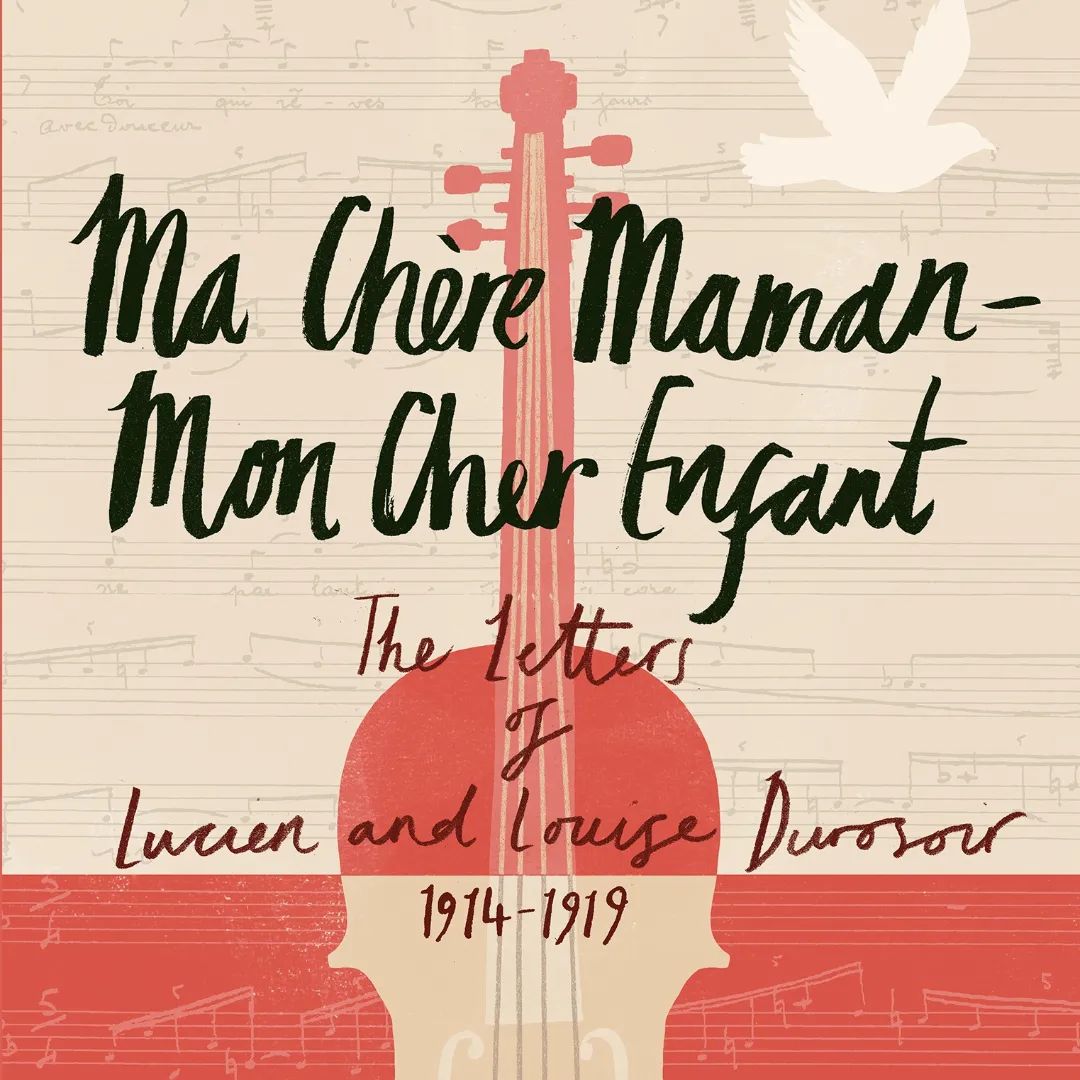
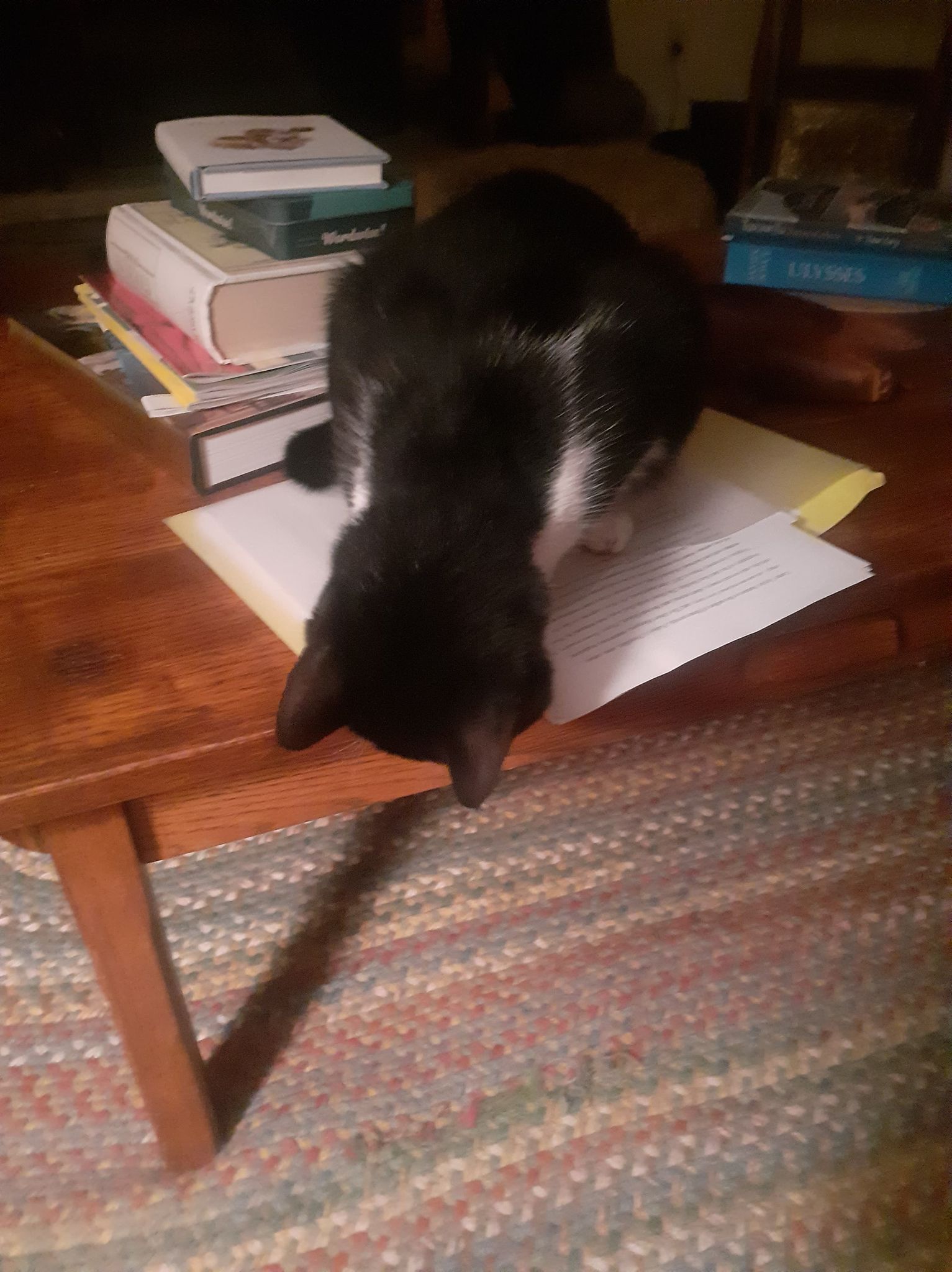
    April 25, 2021: Spring Hill Cemetery Park, Charleston, West Virginia. Elizabeth was walking her collie, Sally, when Sally came to an abrupt halt. A loud meow was echoing from the woodpile at the bottom of the hill. People organized and dogs were passed around and a friend scrambled over the bank where a small black and white kitten emerged, yowled loudly, and was carried up the hill and passed to Elizabeth. Because of an edict from our attorney, the kitten was only supposed to be staying until the animal shelter reopened on Tuesday, but by then it was too late. The kitten, knowing a good deal when she saw one, got to work quickly. With an evident flair for literature, she quickly turned into an essential Blackwater Press team member and chose her first manuscript (Ma Chere Maman…), she demonstrated total disdain for dogs Sally and Lucy, and made her nest in any and all available laps. This was before she had demonstrated her prowess as a killer.

    For Answer Your Cat’s Questions Day, we’re delighted that our very own Flora MacDonald Ford agreed to sit down and answer some of our questions, based on the set used by many authors for character development that originated in 1890 with Marcel Proust.

    • What is your idea of perfect happiness?
      I am perfectly happy.
    • What is your greatest fear?
      Being homeless again. Being hungry again.
    • What is the trait you most deplore in yourself?
      Nothing. I’m perfect.
    • What is the trait you most deplore in others?
      Weakness of character and lack of purpose.
    • Which living person do you most admire?
      Mommy.
    • What is your greatest extravagance?
      Liberty print collars from Made by Cleo. I have my eye on a chicken-shaped cat bed, but I’d probably just look at it and never get in it…
    • What is your current state of mind?
      Pensive. There are birds outside the kitchen window. But I can’t get them. Otherwise content.
    • What is hardest about your life?
      What I think most people don’t understand is the constant pressure. It’s just one thing after another, and the constant demands. It’s all very complicated, and no one really knows what it’s like.
    • What do you consider the most overrated virtue?
      Niceness.
    • On what occasion do you lie?
      Never.
    • Describe your role at Blackwater Press.
      As official kitten, I like to think I play a key part in the publication process as well as the day-to-day running of things.
    • What do you most dislike about your appearance?
      Nothing: I’m beautiful.
    • Describe your average day.
      I like to be up early: between 4 and 5 most mornings, and I get my breakfast immediately. After that I’m shut out of the bedroom because not everyone appreciates the joys of the morning like I do. I like to run around and make noise, sit in the kitchen sink and watch birds, guard my litter box, and sometimes I’ll get fish on a stick and drag him around for company. Around 7 or so I’ll start howling at the bedroom door. When it finally opens, I run around and show my tummy. Then there’s more bird watching until it’s finally time for morning tea and laptime. Then I like to help make the bed. I think it’s an important part of the daily routine. Then depending, I either nap, play, help with work, or look out windows until lunch. After a hectic morning, I sleep most of the afternoon. Locations vary. Around 5 I like to wake up and run around, maybe play with gnome on a stick, have a drink, and then have my dinner. Then it’s back to sleep until about 8, then I move and sleep on the back of the couch or have more laptime until bedtime. I like to play before bedtime, and sometimes get a snack. Most days follow this schedule with some variations depending on location and schedule.
    • Which living person do you most despise?
      He knows who he is.
    • What is the quality you most like in a man?
      Long legs make the best lap.
    • What is the quality you most like in a woman?
      Softness.
    • Charles Edward Stuart’s famous escape across the Highlands following his army’s crushing and ignominious defeat a Culloden: discuss.
      Thanks for this question. I must say that dressing a very tall man who needed a shave and didn’t speak the local language as a woman to smuggle him out of the country isn’t the best idea I’ve ever heard, but apparently it worked. And passing him off as Irish. What’s that say about mid-eighteenth-century perceptions of Irish women? They were big, ungainly, and homely?
    • Which words or phrases do you most overuse?
      MEEEROWWOOWWRR
    • What or who is the greatest love of your life?
      Mommy.
    • When and where were you happiest?
      I’m happy when I’m baking at the heat duct behind the kitchen door at home, teasing Sally, and having my tummy rubbed. Or when Mommy is holding me. I like to be held.
    • If you could change one thing about yourself, what would it be?
      Nothing. I’m perfect.
    • How do you pick manuscripts?
      It’s all down to how the paper feels on my butt. That instantly tells me the quality of the work.
    • What do you consider your greatest achievement?
      I’m only three but those who keep count say I’ve killed 26 varmints of various descriptions.
    • What is your most treasured possession?
      My Fish on a Stick.
    • What do you regard as the lowest depth of misery?
      Going to the veterinarian.
    • What is your favorite occupation?
      Snuggling. Playing. Killing. Teasing Sally. Looking out the windows. Climbing my cat tree.
    • What is your most marked characteristic?
      I have the strength of my convictions.
    • Who are your favorite writers?
      Elizabeth Auld, Zoe Strachan, William Burleson, John Fulton, Melanie Bianchi, Robert Ford.
    • Which historical figure do you most identify with?
      Flora MacDonald (duh?)
    • Would you kill the Blackwater Bird?
      No comment (shows tummy).
    • What is it that you most dislike?
      The veterinarian.
    • What is your greatest regret?
      There was that time I had to have some help finishing off a mouse. I’m so embarrassed. The Angel of Death requires no assistance.
    • Why are you so cute?
      (rolls over, shows tummy)
    • What sort of music do you like?
      Can I tell you what I don’t like? I don’t like live baroque flute. It hurts my ears and makes me attack the player. And there was that time Mommy had the job interview in Colonial Williamsburg and had to play fife. We don’t talk about that. I also know as a figure of some historical importance I feature prominently in many songs and tunes. I don’t mind some of them, like “Flora MacDonald’s Farewell to the Prince,” or “Flora MacDonald’s Fancy,” but some are just insipid. “Tweedside.” What beauties doth Flora disclose? How sweet are her smiles upon Tweed? Please. And don’t get me started on the “Skye Boat Song.”
    • What is your motto?
      Can I have two?
      Nemo me impune lacessit.
      Tha fios aig an luch nach ‘eil an cat a’s tigh.

    Flora MacDonald’s Fancy.

  • Short Story Day 2023

    Short Story Day 2023

    December 21 is the shortest day of the year – and it’s no coincidence that it’s also Short Story Day! Short stories are becoming increasingly popular. With their variety of plots, settings, and characters, they are bite-size reads most people can wedge into busy schedules, or even enjoy in one sitting to savour different scenarios.

    Have you read any of our short story collections? We’d like to spend a few words about our short story authors and their wonderful books.

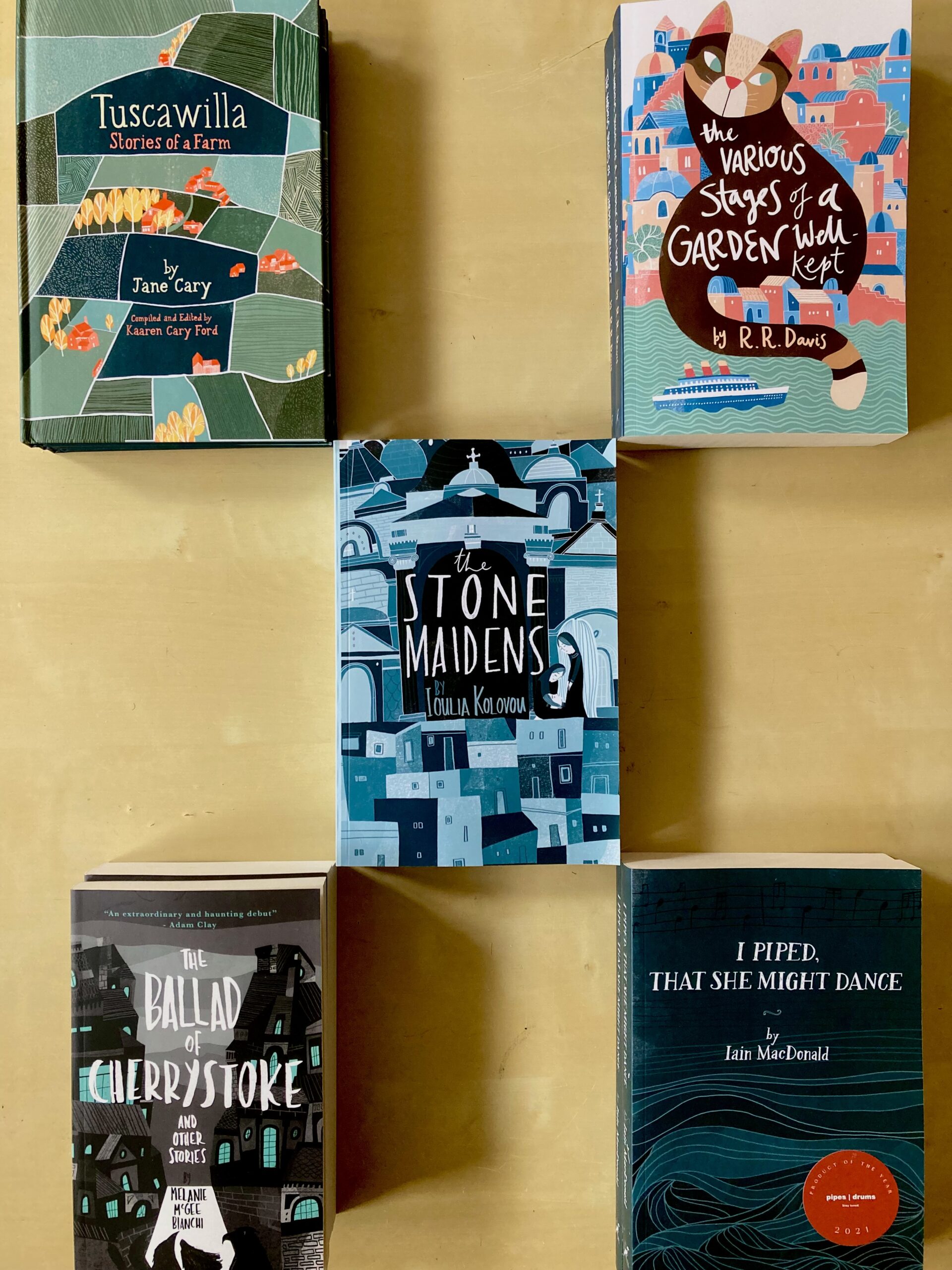
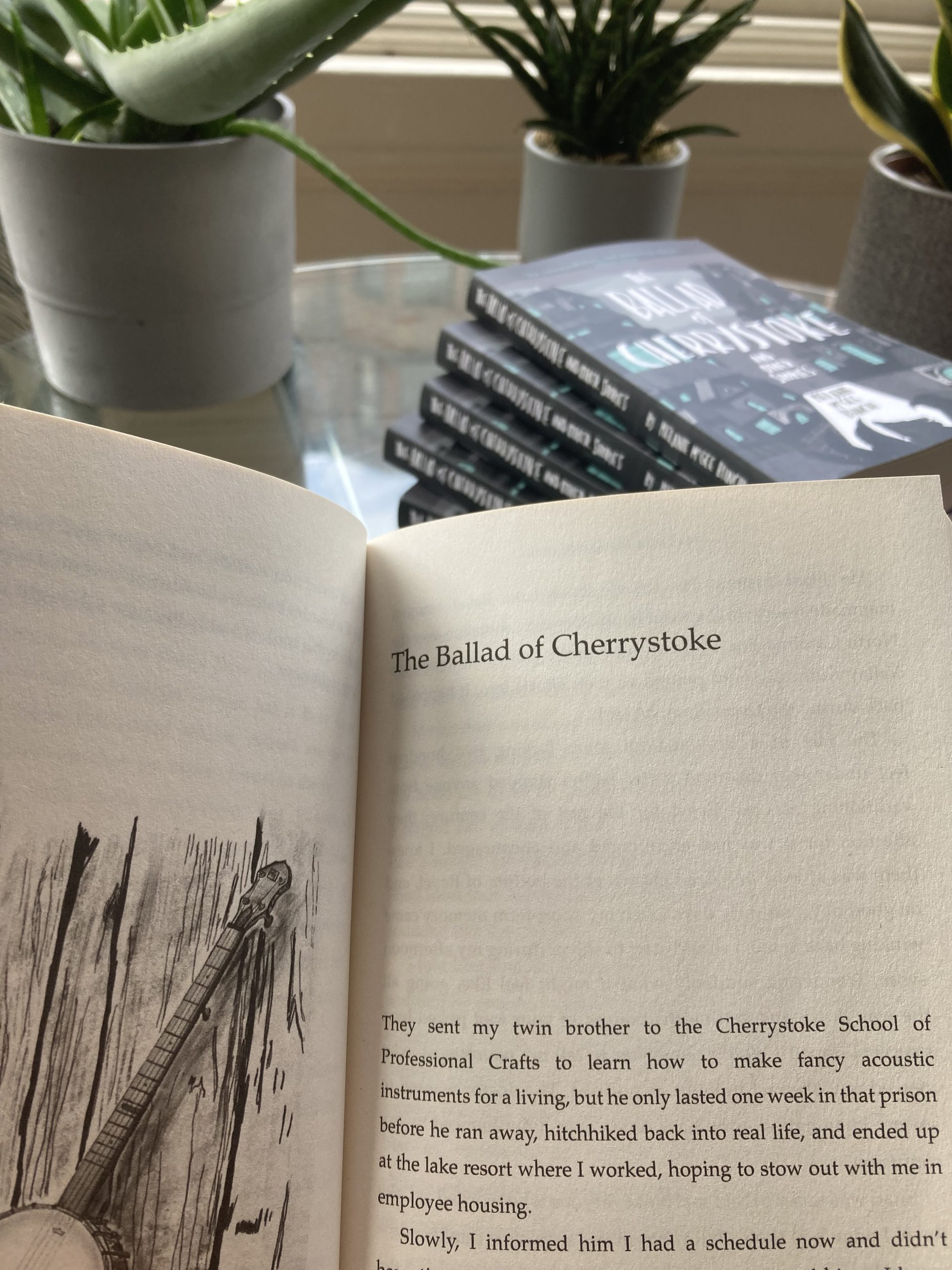
    Aside from our Short Story Contest, which we ran for two years and had us come in contact with some excellent authors (debut and expert), we published Melanie McGee Bianchi’s The Ballad of Cherrystoke and Other Stories (2022) – her first published short story collection, and ours too, so a double first! Melanie’s essays have been published regionally and nationally, and her poetry has been nominated for a Pushcart Prize, and her essay on ballads appeared in the 2023 winter issue of Oxford American. The Ballad of Cherrystoke is deeply rooted in the area that has shaped her character: Appalachia. It explores gentrification and culture clash in the mountainous South, where the beauties of the natural landscape meet a complicated contemporaneity. Her dry, earthy prose tells the stories of the area’s everyday people. For all these reasons, it was an SPD Bestseller!


    The second short story collection we published is John Fulton’s The Flounder and Other Stories (2023). John’s short fiction has been awarded the Pushcart Prize, cited for distinction in The Best American Short Stories, and published in a variety of journals and reviews. His other books have received several distinctions and prizes. The Flounder explores the riddles of desire, youth, old age, poverty, and wealth. From pawnshops to law firms, from California to the coast of France, it lays bare the complexities and poignancy present in everyday life, in a prose that is vibrant and lyrical. The Flounder was chosen for Poets & Writers New and Noteworthy Books Section, and selected for SPD Recommends.


    For 2024, we have a new short story collection in the pipeline: Khanh Ha’s The Eunuch’s Daughter & Stories. We are very excited to have Khanh Ha on board at Blackwater Press. As well as winning our second Blackwater Press short story contest, he is a ten-time Pushcart nominee, finalist for The Ohio State University Fiction Collection Prize, Mary McCarthy Prize, Many Voices Project, to name but a few.

    Khanh Ha

    He has published several books and short stories, and has been awarded the Sand Hills Prize for Best Fiction, The Robert Watson Literary Prize in Fiction, The Orison Anthology Award for Fiction, and many more. His exploration of modern and olden-day Vietnam will lead you into imperial palaces populated with concubines and eunuchs, riverboats where a stranger consigns his past into a little girl’s hands by gifting her a myra bird; through war zones and bombarded villages, and cosmopolitan households where lies and truths form a web that questions moral standards.

    Will you be choosing short stories for your holiday reads?

  • October 2023

    October 2023

    And here it is, the end of the month again. October has seen the publication of Carter Taylor Seaton’s novel Guilt, with events with our friends at Booktenders and Plot Twist, the WV Book Festival, and events for Mission to Madagascar at the Kanawha County Public Library and Booktenders.

    Zoë Strachan also continued to celebrate the launch of Catch the Moments as They Fly in style, with more wonderful events at Golden Hare Bookshop in Edinburgh and the Dick Institute. Also check out Zoë’s interview on BBC’s The Afternoon Show.

    A blowhard at WV Bookfest called Elizabeth sweetheart, and told her words don’t sell. She corrected him to Dr Sweetheart. 

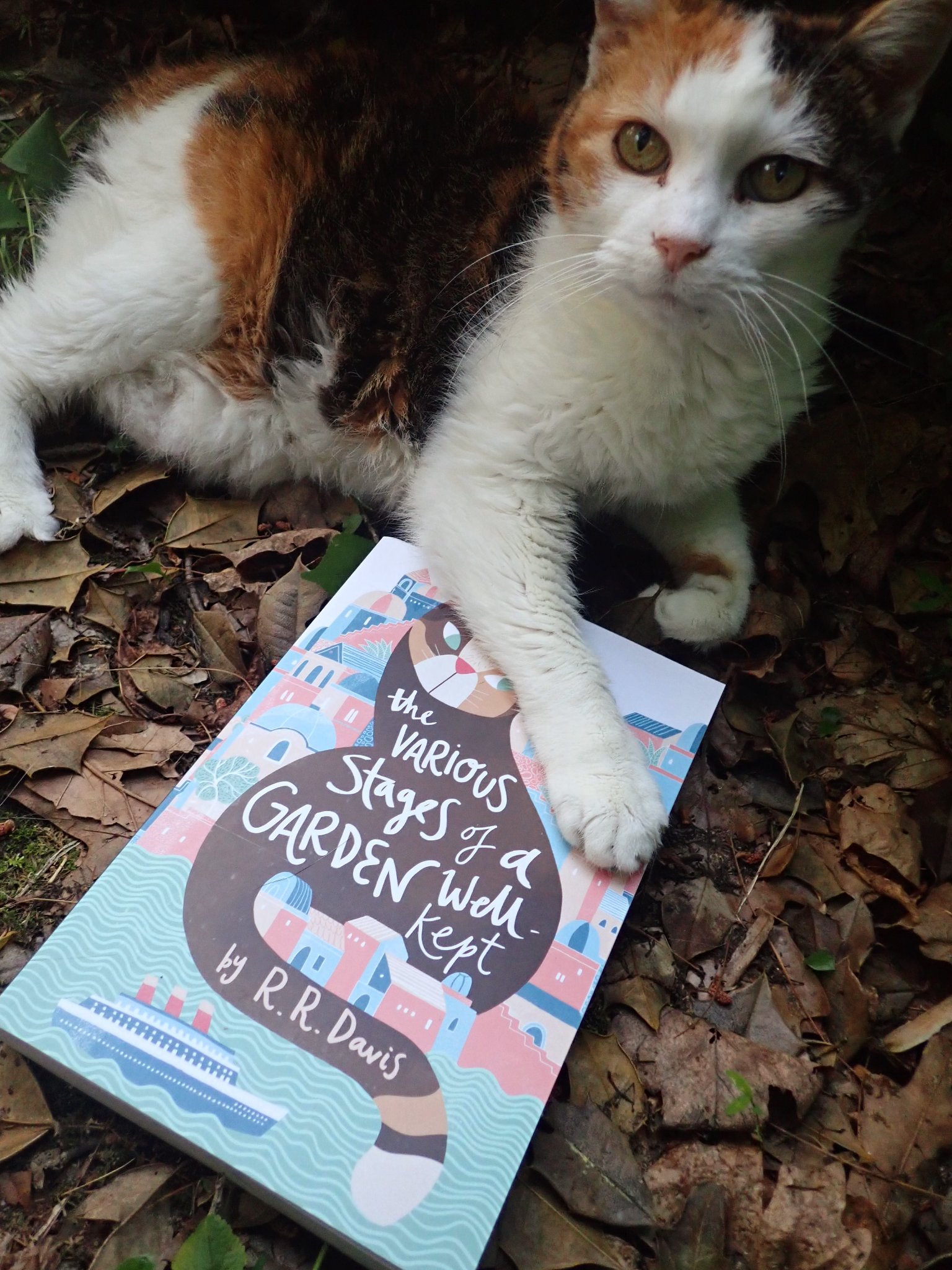
    We just passed National Cat Day. Why not celebrate with a copy of R. R. Davis’s The Various Stages of a Garden Well-Kept?

    Our last book of the year is the wonderful and deeply unsettling novella Symbiosis, by Milagros Lasarte.

    And, we end with the announcement that our co-founder, John Reid, has left the company to start a new life in Mexico. We thank him for his years of dedication and vision, and wish him all the best in his future plans. 

  • September 2023

    September 2023

    Look at that, our newsletter this month falls on publication day for Richard Robison’s gorgeous memoir: The Boy from Nowhere! 

    The Boy from Nowhere surprised the heck out of me…Offered with modesty and narra­tive grace, charged with heart-stopping events and characters.”

    – Stephanie Marlis, National Endowment for the Arts recipient, author of Rife.

    September also saw the launch of Zoë Strachan’s novel Catch the Moments as They Fly. We can’t thank everyone enough for coming to the launch event at Waterstones in Glasgow on the 21st of September, and so glad to hear how much folk are enjoying the book!

    And we have more book celebrations coming up, so we’ll round off by listing our October events. Hope to see you at some of them – wherever you are in the world!

    5th October – Mission to Madagascar with David Mould (US – Athens)

    12th October – Catch the Moments as They Fly with Zoë Strachan (UK – Edinburgh)

    14th October – Catch the Moments as They Fly with Zoë Strachan (UK – Kilmarnock)

    15th October – Guilt with Carter Taylor Seaton (US – Barboursville, WV)

    17th October – Mission to Madagascar with David Mould (US – Charleston, WV)

    18th October – Mission to Madagascar with David Mould (US – Barboursville, WV)

    21st October – West Virginia Book Festival

    28th October – Guilt with Carter Taylor Seaton (US – South Charleston, WV)

  • August 2023

    August 2023

    I don’t know who needs to hear this but…September is coming! The season will soon start when the leaves start turning all shades of gold, and the best activity is to curl up in a comfy spot with a hot cup of something nice and…a good book, of course.

    We have some new ones for you, ready to pre-order – and our newsletter subscribers get a 20% discount with the code n9adb299, remember!

    We are thrilled about Zoë Strachan’s new book, Catch the Moments as They Fly. Zoë is one of Scotland’s most loved authors, and the winner of the Betty Trask Award. Her latest novel gives a beautiful insight into the rapidly changing Scotland of the ‘30s to the ‘60s, captured through the lens of her protagonist Rena Jarvie – a strong, ambitious, forward-thinking woman – in a time where such women are never quite heard.

    And if you’re in Scotland, don’t miss her launch at Glasgow’s Sauchiehall Street Waterstones! This event will also mark Vivien and John’s first ever in-person meeting after being business partners for several years, which is probably also worth a celebration in itself.

    Guilt by Carter Taylor Seaton is part murder mystery, part examination of racial and class issues. Carter holds a Tamarack Foundation Fellowship Award for Lifetime Achievement in the Arts, and the West Virginia Library Association honoured her with the 2014 WVLA Literary Merit Award. The book follows the life of Alexander Betts, from his segregated childhood in Southern Georgia to becoming an established judge. From the age of sixteen he has carried a heavy secret: will his position give him the chance to finally right his wrongs?

    Lastly, Richard Robison will give you a glimpse of life in 1960s America in The Boy from Nowhere. In this striking autobiography, Richard shows us what it was like as a child to move from town to town without setting roots anywhere, always following his parents’  restless quest for the American Dream, struggling to belong and finding solace in cycling, baseball, and music.

    And if you fancy something shorter, have a look at Melanie McGee Bianchi’s latest short story!

    We hope we’ve given you enough inspiration for the next month. Happy reading!

  • Q & A with John Fulton

    Q & A with John Fulton

    JR: How did your first forays into writing compare to the work you publish now?

    JF: It depends on what you mean by my “first forays,” which were way back in my college/university days. I was experimenting then, playing around with language, seeing what I could do, what sort of voices and linguistic acrobatics I was capable of. When I first started putting regular time in at the desk, it was the early 1990s and I was heavily influenced by Raymond Carver, Gabriel Garcia Marquez, Italo Calvino, and Angela Carter, among others. I was trying to write at once gritty realism and magical realism. That was a challenging combination to pull off, and it mostly didn’t succeed. It’s hard to write in the shadow of Marquez. Any attempt to sound/be like him will make the aspiring writer look small. But it was fun. Later, when I moved to continental Europe for four years, I was heavily under the spell of Gordon Lish, an influential editor who was big in the US. He was a proponent of an extreme kind of minimalism (a lot less is a whole lot more) and “dirty realism” or what some called “kitchen sink realism,” which means everyday life with some tough living thrown in: lots of alcohol, bad relationships, people living on the edge of poverty. He was the fiction editor of Esquire and then an important book editor at Vintage. He launched the careers of Raymond Carver, Barry Hannah, and Amy Hempel. My first published story was in a magazine Lish edited called The Quarterly.

    Ultimately, that kind of writing, in which everything was implied and shown and almost nothing was said, left me feeling gagged and bound. Most of my stuff was no longer than 2-4 pages. I was living in Berlin, Germany, at that point, learning German and reading a lot in that language, including the original versions of The Brothers Grimms’ fairy tales, which are astonishingly good and nothing like the Disney versions I’d grown up with. That left me wanting to write even more in a fable-like mode, which often didn’t work for me.

    It wasn’t until I moved back to the States to attend the University of Michigan MFA program that I broke free of that sort of writing. I discovered the stories of early Richard Ford, Alice Munro, Denis Johnson, and Joy Williams, and started writing longer form stories in the tradition of psychological realism. The writing I did in that program and for a few years after finishing at Michigan made it into my first collection. I was writing stories that cut immediately to conflict and veered towards crisis and more explosive material. For example, in one story, a janitor who works at the local YMCA gets drunk, puts too many chemicals in the pool, and thinks he’s blinded a little girl who jumps into the toxic water. He loses his job, goes home, drinks some more, fights with his wife, and struggles to rid himself of the terrible guilt he feels. There was humor in these stories, edgy writing, and often extreme events. I was also writing a lot about adolescent characters, whom I still find fascinating. Adolescents are natural rebels and sharp critics of the adult world even while childhood and innocence have become embarrassing—a source of shame for them. They’re stuck between worlds with nowhere to go. The title story in my first collection, “Retribution,” is about a 15-year-old girl whose mother is slowly dying. She’s angry, confused, has a deep infatuation with a German exchange student, and ends up intentionally hurting her driver’s education instructor. But there was a quietness in that story, a patience, that was new to me. This story was about fifty pages, the longest I’d ever written. In short, it suggested new directions, new possibilities for my work.

    My current stories now are less conflict based, often less explosive and crises oriented, though there’s still a fair amount of tension in them. “Box of Watches” unfolds around an armed robbery in a pawnshop; “The Flounder” is about a couple struggling with an episode of infidelity that the wife confesses to her husband, the night before they leave their home in Switzerland for a vacation in France. But the stories take their time, they expand and explore character and situation over more pages than my earlier work. While I still like to write about adolescents, young characters take up fewer pages in The Flounder. I’m in my fifties now and am writing more about the relationship between generations, the young and the elderly. In fact, it wasn’t until I started reading the proofs for this book that I realized just how interested my more recent stories are in older characters who are aware of being close to the end of life, who remember and recall more than they look forward. My influences have changed, too. One of my favorite writers more recently is the great Irish novelist and short story writer, William Trevor. There’s a quiet tension in his work that is breathtaking, odd, and deeply unique to him. His stories develop with patience and move towards climaxes that can feel both muted and incredibly powerful.

    In The Flounder, I’m also writing about a time in my life when I lived in Europe, mostly in Switzerland and Berlin, Germany, for four years. This was a challenging, if rewarding, experience. I was in my mid-twenties, in my first serious relationship, which was difficult and finally didn’t work out, and very aware of being American. For years, I tried to write about this time without much success. Then, in 2019-2020, I moved to France for a year with my family and the stories about this era in my life, which was a time of travel, mobility, and discovery, started to flow just as lockdown began in March of 2020. Something about being shut into a room and not being able to circulate freely gave rise to and access to that material. A lot of these stories were written or begun in lockdown. One thing I’ve learned about myself is that I often need many years, even a decade or more, to write about a formative experience.

    JR: And if you had to recommend one Brothers Grimm tale?

    JF: We all know these tales through Disney, which sanitized them. But the Grimms’ versions are brutal, violent, and graphic. I’d recommend dipping into one of the more familiar stories like “Cinderella.” We all think about this as a girl-meets-prince-charming story, which it is. But the reader hardly notices the happy ending here because it’s proceeded by such extreme abjection (a young girl’s beloved mother dies suddenly, after which her father quickly marries a sadistic, materialistic woman whose daughters torture and enslave Cinderella. This young girl not only works constantly but is fed sparingly from leftovers and kept like a farm animal. My favorite part is the revenge exacted on the stepsisters, who are so desperate to catch the prince that they carve large parts of their feet off (a big toe and a heel) to fit into the slipper. Their mother actually hands the knife to them and assures them that they won’t really need to walk once they’re the princess. The shoe fits, but soon enough the prince can see blood gushing from it and he’s not fooled.

    By the way, a number of European fairy tales and folktales snuck their way into the stories in The Flounder (“Hansel and Gretel” in “Saved,” “The Fisherman and His Wife” in the title story, and “The Death and the Maiden” in “Budapest”). Perhaps this should come as no surprise since I was reading them during my years abroad and have been obsessed with them ever since. While I my stories are realistic, these tales, which contain surprising insight about human desire, sexuality, and greed, infuse the work in places with a bit of strange magic. At least, that’s my hope.

    JR: You’ve discussed the gradual shift in style and subject matter. But are there any eurekamoments you can recall, moments that altered how you approach the task of writing? Or has it always been a gradual enterprise?

    JF: I wish there were. I’ve heard many writers say—and I’ll concur with them—that every project feels as difficult and challenging as the first successful story or novel. The challenges of any given project are often unique and require new ways of thinking, new strategies, new solutions. That said, discovering material (what it is that one needs to write about) can liberate my work for a period of months or years until I’ve written through or reached the end of that material. I’ve also learned over the years that part of my process is arriving at impasses, places where the work just stops. When this happens, I usually need to do one of two things: work in a different direction or—and this is wretchedly hard for me to do—give up on the project. Forcing a story or novel is about the worst feeling I’ve encountered at the desk. There’s wisdom in knowing when to put something away. I do this a lot only to return, look at the pages with fresh eyes, and see something that I couldn’t see before and that allows me to finish the thing and often publish it.

    Here’s one illustrative example: I began writing “Box of Watches,” which is included in The Flounder, more than 20 years ago. In 2017, I recalled that material—the pawnshop, the armed robbery, the grandfather—and felt the pull it still had on me. When I dug a very rough and incomplete draft of the story out of a box, I knew what to do with it and finished the story in a few days. There might be some “eureka” in that: know when to quit; know when to start again.

    JR: For the most part the stories you tell in The Flounder are rooted in reality. Strange things happen – an imagined Charles Manson lurks in the shadows of “The Boy and the Murderer”; in “Box of Watches”, a gunman enters a pawnshop carrying a “box of used-up time.” But you seem to seek out the absurdities present in everyday life, rather than setting your fiction in worlds with different rules. What do you make of this interpretation? Are you ever tempted––and I had written this question even before you mentioned Marquez and Calvino!––are you ever tempted to take a step further in that direction, towards the speculative or the surreal? Or is the real world strange enough?

    JF: I think you’re right: I work from the familiar towards the strange. And yes, as I say above, I’ve deeply admired authors like Marquez and Calvino, who work in the opposite direction: they need to ground their magical and/or absurd visions in the familiar or everyday world so that the reader sees its relevance and relatedness to lived experience. An old man with wings falls out of the sky (Marquez) or a man spends his entire life living in trees (Calvino). That’s wonderful, a kind of circus mirror that shows us what we often forget: how strange humanity really is. I think a lot of art does that. It delivers or returns us to a vision of awe and wonder at human experience—something we forget because we’re beaten down by routine, money making, survival, and the fatigue of being sensory creatures. We’d be overwhelmed if we really saw the variety and complexity of the world in front of us. There’s no time to really look at that bench at the bus stop or the tree next to it because you’ve got to get on the bus and get to the office.

    But if you’re working in the realm of the familiar (otherwise known as “realism”), you need to find ways to show the reader why that bench and tree deserve and reward a closer look and might even remind us of the awe and strangeness that we’ve forgotten and that is everywhere around us. My mentor in graduate school, Charles Baxter, writes a wonderful essay about this called “On Defamiliarization.” Baxter talks about various strategies that writers employ to compel the reader to pay closer attention, to observe and see more carefully.

    In many of the stories in The Flounder, there’s a kind of trap door that opens into a slightly strange or dreamlike vision, usually somewhere towards the middle. This transition is enabled by syntax, tone, and diction. One example: In the title story, Marian confesses to her husband Daniel that she’s just slept with someone else the night before they go on a short vacation. This isn’t exactly a new story: writers have been interested in infidelity for centuries. There is both tension and stakes in it. There’s also the challenge of showing the reader something unexpected about this particular couple and their struggle with a familiar problem. When they leave their home in Switzerland (what nation is more grounded in the stuff of everyday life—money, jobs, security, and routine—than this one?) and cross the border into France (a clear counterpoint to Switzerland), things change. A huge storm engulfs them. They arrive wet, frightened, and in the dark at their hotel, where they’re the only guests. Of course, the reader will recognize these elements. We’re in the realm of the gothic, the slightly scary, the fever dream. The hotel keepers are a long and happily married couple, and when the woman greets our troubled young Americans at the reception desk, her clothing is askew and there’s something at once pragmatic and sensual about her. She promises the couple a dinner in the hotel dining room with a delicious and magical fish as the main course. The meal they share is no ordinary meal and soon we’re in the realm of something like a dark fairy tale or folktale that’s real but slightly underlit, strange, full of desire, fear, and expectancy. As I say above, this particular story is informed by “The Fisherman and his Wife,” which concerns the dangers of wish fulfilment.

    By the way, marriage is one institution that is easily destroyed by those who refuse (or are simply too tired) to remain attentive to the wonder around or in front of them—usually the wonder of their partner, whom they think they know. Could art save marriages? Probably not. But you might give it a try by reading The Flounder. How’s that for a sales pitch?

    JR: Excellent, I’ll alert all my friends in bad marriages! Now, before publishing The Flounder with Blackwater, you published two other collections, The Animal Girl (LSU), Retribution (Picador), and the novel More Than Enough (Picador). Why do you seem to lean towards the short story as a form?

    JF: For whatever reason, the form of the story is more intuitive to me. Perhaps I’m better at compression than expansion. I also like the way stories use implication, expressive absences and silence. What’s not on the page can be just as important and expressive as what it is on the page. Novels do this, too. But a short story, by its nature, almost necessarily does it.

    I’m also dyslexic, which makes many things challenging for me, including the English language. I have issues with spacial relations and easily get lost, even in my own city of Boston. The novel can feel vast and my process of writing one often involves charts, outlines, sticky notes, drawings, and various other methods of reminding myself of what came before so that I can see what might come next. On the other hand, the story fits more easily in my mind as a unity. As a reader, I love both short fiction and novels. But there is a uniquely intense and immediate pleasure in reading a story in one sitting that just isn’t possible with the novel. Finally, the psychic toll of writing a novel is considerable. The great short story writer Lorrie Moore compares a story to a love affair and the novel to a long, hard marriage. As any practicing writer knows, there’s no guarantee that any project will succeed. I’ve published one novel but have begun many more and have two full drafts of two different novels in the drawer. I’ve also written or begun countless unsuccessful short stories. A failed short story may sting for a day or two or even week, after which you regroup and start another one.

    JR: You’ve touched on how the stories in The Flounder are set across several countries: America, France, Hungary, Switzerland. Tell us a little bit about that, and about how you find the setting for each story?

    JF: As I say above, I lived in continental Europe for four years in the early 1990s, which was an intense time for me. I learned a new language, was living in a new culture, and was reflective and self-conscious about what it meant to be American in an increasingly global, shrinking, and complex world. That was thirty years ago. The material resisted narrative fiction until the pandemic started and I was living in Europe again. The first story I completed about this time in my life was “Budapest,” about a Mormon kid from rural Utah discovering Eastern Europe shortly after the Berlin wall falls. He’s trying to escape from his own conservative and restrictive background just as the city dwellers around him are beginning to enjoy their own newfound freedom.

    While I’m not a Mormon, I did grow up in the rural western United States, which is often defined by conservative religion and conservative values. It’s also an immense place and not easy to escape, which was one of the reasons I decided to leave it. I was aware of and reading many writers who’d felt that they had to leave their homeplaces to do their work: Henry James, Ernest Hemingway, James Joyce, T.S. Eliot, Gertrude Stein, and many more. “Budapest” is very much about this: leaving cultural and familial ideas of the self behind and seeing whatever you might see once these are gone or exposed for what they are. Of course, the character in “Budapest” also discovers that it’s almost impossible to escape the mythology of the United States, which I discovered, too. There’s a love-hate relationship the world has with the U.S. for good reasons. But it’s the adoration for the U.S. and its media culture that dogged me and that dogs the poor kid in “Budapest,” whom everyone recognizes immediately as American when he simply wants to fade away and lose this part of his identity. It turns out that it’s very hard to start over. Even Americans, who believe in the notion of self-making, have to live with history.

    But I also write about the places I left. The story “Saved,” about two kids who befriend an elderly neighbor, takes place in the Mohave Desert in California, in a small town where I lived for a number of years as a kid. I know that town just as I know the Bible-belting church where the two kids go every Sunday. There’s a loneliness to that landscape that I absorbed and that, I hope, becomes expressive in the story. All the other places in The Flounder—Chicago, Boston, Normandy, Switzerland, Budapest—are places I spent time in or even lived in. I feel the same way about setting, a home or a room or a store or a hotel. Knowing the layout of rooms can help me make a setting feel real and fully evoked on the page. While I’ve never been robbed in a pawnshop, my grandfather used to own one. As a kid I spent a lot of Saturday afternoons with him behind the counter. He’d been robbed many times and he told stories about it. He died decades ago, but I hope I captured something about him in “Box of Watches.”

    JR: The names in The Flounder are interesting. Daren and Martine in “Lovers.” Daniel and Marian in “Nocturne” and “The Flounder.” There’s something unsettling about it.

    JF: Names are deeply personal and, I think, magical. They literally summon or call forth a person. That’s why we often say them. While some people know why they choose certain names for their children—i.e., their namesakes are beloved friends or relatives—often one is attracted to the sound, the impression, something mysterious in the cadence or syllables that, for whatever reason, seems right. If the name of a character doesn’t fit, I feel distracted by that and tend to grind to a halt until I find the name that works. I really can’t say why those characters ended up being Daren and Martine, Daniel and Marian. Martine, I knew, was from a French-speaking culture and I like the sound of that short, sweet “i” in the final syllable. I wonder if you’ve ever had a friend or acquaintance whose name just didn’t seem to fit them for whatever reason. There’s a cognitive dissonance when any given Frank, Jane, or Myrtle just doesn’t seem like a Frank, a Jane, or a Myrtle. What if Hamlet had been, I don’t know, Romeo or, to really stretch it, Frank…? There are so many great characters from literature—Holden Caufield, Huckleberry Finn, Julien Sorrel, Emma Bovary, Dorothea Brooke. To put it another way: character is spectral, hard to contain and embody, and names do just that—they hold and reflect character.

    JR: That’s funny you mention that: sometimes I’m not sure the name John fits you! But perhaps that’s because it’s so close to home…

    JS: Yes, I’d say the same about you. Of course, our name suffers from overuse. There are so many Johns out there that we’re in danger of being seen as part of a generic group. So perhaps we’re both too unique for our name?

    JR: There are various themes that crop up in this collection and in your work generally, some of which we’ve mentioned. Nicholas Delbanco wrote on The Flounder: “Marital fidelity and infi­delity are at issue here, as is the relation between generations and the search for (one might as well call it) authenticity.” One could say the collection also comments on love and loss, old age, poverty and wealth. How much does an author choose what they write about? Is it a conscious decision to have these themes reappear in your writing?

    JS: Many years ago, the novelist Alice McDermott read a few chapters of a project I was working on and suggested a different direction. I started to explain what I wanted to do with the project and she said, with some vehemence, “Forget about what you want to do. You don’t choose your material. Your material chooses you.” I think the reason her words have stayed with me is that, in my experience, they’re true. I don’t think too much about theme or what my work is about. I think about character, about development (I don’t want to be repetitive), about surprising the reader and myself, creating tension, syntax, diction, tone, and avoiding cliché. But my material tends to be whatever bothers me, eats away at me, nags at me, and begs to be told or given expression to. There’s often a silence or void at the center of the thing I’m working on—something that needs to be said and that maybe can’t fully be said or explained—that tends to gain force as I work, that pulls words out and around it and suggests the next word or phrase or scene. That’s when I’m in what I’ve heard a lot of people call the “zone.” You don’t want to get in your way then by overthinking a story. You follow your gut. You keep going.

    JR: Do you have a favourite character in The Flounder?

    JF: I hesitate to admit that I do have a favorite character, but I think I do. It would be Kent Boyd in the story “What Kent Boyd Had.” I grew up with a lot of men like him. He’s cocky, loud, masculine, lacking in emotional intelligence, and more oblivious to those around him than he should be. While I probably wouldn’t want to have a beer with him, I think that I succeed (I hope I do) in making him sympathetic. I put incomplete versions of that story away for weeks and months only to take it out again and find it interesting. I kept seeing different sides of him and learning more about him as I worked. That’s what kept the story going for me and, I hope, what will make him and his story interesting and moving to readers. He’s as vulnerable as he is blustery. While he makes stupid mistakes, they reveal flaws and needs that give him dimension, depth, and, I hope, humanity.

    JR: Let’s zoom in a little: what makes a good sentence to you? By and large, your writing feels quite measured, composed – it doesn’t seem as though there’s any rush to get this story out. How do you see the relationship between plot and language?

    JF: Great question. I like surprises in my sentences, something jolting, a small explosion, a word or phrase that shimmers just a bit. Of course, there are different variants or degrees of stylized prose. Some writers veer towards transparency (I mostly do) and others toward linguistic pyrotechnics. Both are great if done well. One stylist I’ve appreciated over the years is the English novelist Martin Amis, whom we just lost recently. Here are some great sentences of his on the art of novel writing: “The trouble with life (the novelist will feel) is its amorphousness, its ridiculous fluidity. Look at it: thinly plotted, largely themeless, sentimental and ineluctably trite. The dialogue is poor, or at least violently uneven. The twists are either predictable or sensationalistic. And it’s always the same beginning, and the same ending.” There’s so much intelligence and wit in this prose. Who else would use a phrase like “ineluctably trite” or “violently uneven”? And the way he describes “life” from the novelist’s point of few is brilliantly defamiliarizing. He says nothing we don’t already know about the subject. But he says it in a way that makes what we know new to us.

    As for the relationship between plot and language, I think this is mostly contained in the prose rhythms, in syntax and diction. Plot isn’t that interesting, though it does create tension and stakes, and it should rise organically out of the language. When I’m writing, I pay close attention to each word or phrase I put down because these suggest the next word or phrase. The cadence of the opening sentences to “Box of Watches” is explosive. We sense that we’re in the middle of a hold up before we see the gun. On the other hand, the opening sentences to “Budapest” are quieter, the rhythms contain an expectancy but not violence. We’re not surprised to feel and see that this story about a voyage is finally a romance and concerns a developing intimacy and connection between two people who meet on a train and spend the next few days together in a city that is strange to them.

    JR: 100 words, biggest influences?

    JF: You can’t escape your background, your religion (even if you lose your faith), your childhood, the landscape you grew up in (the western US), and then the choices you make as an adult, which involve where you live and what you do. All that is in my fiction. The writers who shape me change every year. But here are some: early Denis Johnson, Gabriel Garcia Marquez, early Richard Ford, William Trevor, the wacky and brilliant Joy Williams, Tim O’Brien, the sentences of Richard Brautigan, and often the last really good story collection or novel that I’ve read.

    JR: Finally, you teach in the MFA writing programme at University of Massachusetts Boston. How do you enjoy teaching? Is it helpful for your writing?

    JF: I love teaching, especially when the writing isn’t flowing. I have a ready-made community of like-minded folks among my colleagues and students, all of whom care about literature, reading, and writing. That’s invaluable in a culture that is often indifferent towards art. But teaching is a full-time job and tends to require most of my energy when I’m doing it. While I can get some work done during the academic year, it can be a struggle. Even if I have the time to work, the energy can be lacking. I do a lot of my writing during breaks and during the summers. It’s a gift to be on an academic schedule, which allows for long periods of concentrated work. Otherwise, seeing my students develop as writers and publish their work is exciting. I love that. It can prod me on to the next project, the next unforeseen story or novel.

  • July 2023

    July 2023

    Hello all,

    Hope everyone is staying safe and well this summer. The news is all a bit depressing at the moment, so how about we just talk books for a minute or two? We have A LOT to tell you.

    Joseph Horowitz’ debut novel The Marriage: The Mahlers in New York is garnering superb reviews, with the latest from Clive Paget in Musical America:

    With his unparalleled knowledge of fin-de-siècle classical music in America, Joseph Horowitz [has] brought us closer to Mahler and his wife Alma than any other author I have read… The Marriage is for anybody who enjoys a good read, but especially for people wanting to know more about who Mahler really was.

    Stay tuned for an interview on National Public Radio with Joseph Horowitz about The Marriage.

    We were thrilled to see that The Marriage topped Small Press Distribution’s bestsellers chart, with John Fulton’s The Flounder and Other Stories and Cameron Alam’s Anangokaa not far behind. Head to our website to see what all the fuss is about with these brilliant titles.

    Patrick Colm Hogan made the journey to Glasgow for an event at Hillhead Library, discussing his epic debut novel A People Without Shame. It was great to hear Patrick go into depth on this outstanding book. You can pick up a copy from us or from Hillhead Library for those in Glasgow.

    And now, to the small matter of our next books! We’re delighted to announce that we are putting three new titles up for pre-order. Click on the links below for more detail on each book and each author:

    Catch the Moments as They Fly by Zoë Strachan

    The Boy from Nowhere by Richard Robison

    Guilt by Carter Taylor Seaton

    And don’t forget that as a newsletter subscriber you have 20% off all pre-orders on our website! Just use the discount code N9ADB299 at checkout.

    Finally, we are pleased to feature Kathleen M. Jacobs on our blog this month, with her piece Toxic Positivity Afloat. Kathleen was one of our short story winners in our competition last year, and perhaps this will be the first in a series of guest pieces. It originally appeared in the Register-Herald on May 20. Toxic Positivity Afloat: a Modern-Day retelling of Hemingway’s The Old Man and The Sea.

    Until next month!

Select your currency
USD United States (US) dollar